
CBSE’s Digital Education Revolution: How Online Learning Is Changing Indian Schools
Esha
Education Technology Experts
CBSE’s Digital Education Revolution: How Online Learning Is Changing Indian Schools
By Esha Karmakar
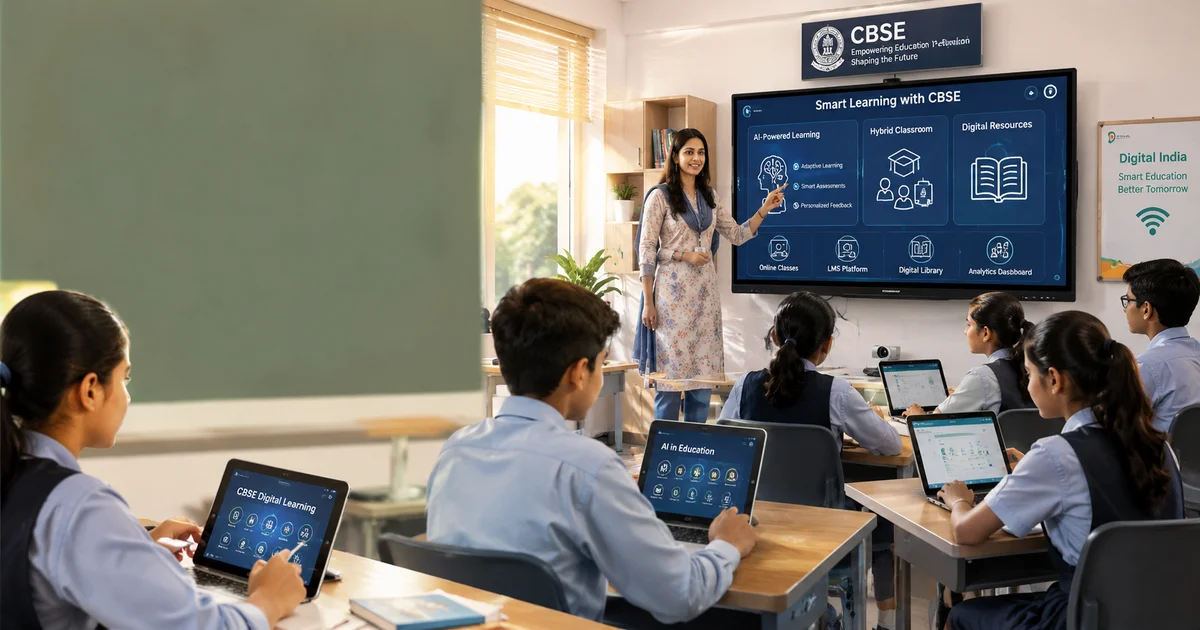
The Central Board of Secondary Education (CBSE) is making major changes in the way Indian schools teach students. Education in India is changing very fast. Schools are no longer depending only on books and traditional classrooms. CBSE is now focusing more on digital education, online learning, and smart classroom systems.
This digital education revolution is changing how students learn and how teachers teach in Indian schools.
Why CBSE Is Focusing on Digital Education
Technology has become an important part of modern education. CBSE wants schools to prepare students for the future by using digital learning methods and smart technologies.
Today students need more than textbook knowledge. They also need:
- Digital skills
- Problem-solving abilities
- Smart learning methods
- Access to online resources
This is why CBSE is encouraging schools to use digital tools and hybrid learning systems.
👉 Read more: Role of Online Learning in K-12 Education
Online Learning Is Becoming More Popular
Many schools are now using:
- Smart classrooms
- Learning Management Systems (LMS)
- Online assignments
- Digital attendance systems
- Recorded video lectures
Students can now learn from anywhere and access study materials anytime.
Online education is making learning more flexible and accessible for students across India.
Benefits of Digital Learning for Students
CBSE’s digital education system offers many advantages.
1. Learning at Your Own Pace
Students can study at their own pace and revise lessons anytime.
2. Interactive Classes
Videos, quizzes, and animations make learning more engaging and fun.
3. Easy Access to Study Materials
Students can easily access notes, recordings, assignments, and online tests.
4. Skill Development
Students become more comfortable using technology and digital tools.
How Teachers Are Adapting
Teachers are also learning new ways to teach students through technology.
Many schools are training teachers to:
- Conduct online classes
- Use AI-powered tools
- Create digital lesson plans
- Track student performance online
This is helping teachers improve classroom management and student engagement.
👉 Explore more: Artificial Intelligence Is Changing the Way We Use Learning Management Systems
The Rise of Hybrid Learning
CBSE schools are now combining offline and online learning. This is called hybrid learning.
In hybrid education:
- Students attend physical classes
- Online tools support learning outside school
- Homework and tests can be completed digitally
This system helps students learn more effectively and stay connected with their studies.
Challenges of Online Education
Even though digital learning has many benefits, there are still some challenges:
- Internet access problems
- Increased screen time
- Lack of devices in some areas
- Student distractions during online classes
Schools and parents need to work together to solve these problems.
Conclusion
CBSE’s digital education revolution is changing Indian schools in a big way. Online learning, smart classrooms, and hybrid education are becoming the future of learning in India.
Technology is not replacing teachers—it is helping teachers and students learn better together.
In 2026 and beyond, digital education will continue to play a major role in shaping the future of Indian education.
About the Author
Education Technology Experts
The Brilliyo editorial team shares insights on educational technology, learning management, and institution growth.
Related Articles

Role of Online Learning in K–12 Education
The way we learn is changing fast and online learning is now a big part of K–12 education. It used to be something but now it is a strong system that helps with teaching, learning, testing and talking to each other. Online learning is good for schools, students and parents because it is flexible, easy to get to and helps with school work. This blog is about learning in K–12 education and how it is changing the way we go to school.
Grow Your Educational Institute with Online Courses
The education sector has undergone a massive transformation. Institutions are no longer limited by physical boundaries. With online courses, you can reach students across the globe.