
Accounting Feature – Ledger Management
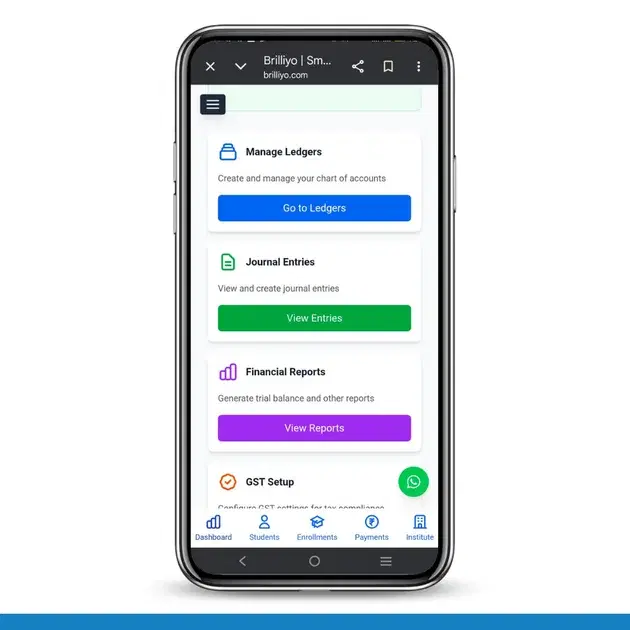
Accounting Feature – Ledger Management
The Ledger Management feature in Brilliyo helps institutions organize and maintain their complete chart of accounts for accurate financial tracking. It ensures all financial data like assets, liabilities, student receivables, and employee accounts are stored securely and accessible when needed.
This feature has two main areas:
- Manage Ledgers
- Dashboard Summary
1. Access Ledger Management (How to Use the Ledger Feature)
This section is used when you need to set up or view accounting ledgers for your institution.
Step-by-Step Process:
- Login to your Brilliyo account.
- From the sidebar menu, go to Accounting Dashboard or tap Manage Ledgers.
- Click on Go to Ledgers to see the chart of accounts:
- Default Ledgers – System-generated standard accounts
- Student Ledgers – Auto-created for students (receivables)
- Employee Ledgers – Created for salary or payroll accounts
- Journal Entries – Shows count of recorded transactions
On the Ledgers page, you will see categories like Assets, Liabilities, etc.
- To add a new ledger, click Create New Ledger.
- Enter details such as:
- Ledger Name
- Ledger Group (e.g., Assets, Current Liabilities)
- Opening Balance (if applicable)
Save the ledger.
✅ New ledgers are added to your chart of accounts and can be used in transactions such as Receipts, Payments, and Journal Entries.
2. Ledger Dashboard Summary (What It Shows)
The Accounting Dashboard gives you a quick snapshot of your institution’s accounting setup:
- Default Ledgers – Shows total pre-configured accounts.
- Student Ledgers – Lists auto-created accounts for students.
- Employee Ledgers – Tracks staff and payroll accounts.
- Journal Entries – Number of recorded accounting records.
- System Status – Shows whether accounting is set up and ready.
You can navigate to Journal Entries and Financial Reports directly to see:
- Transactions recorded against each ledger.
- Trial balance and other financial statements.
3. How Ledgers Work With Transactions
- When you generate a Receipt, Brilliyo posts the amount to the Student Ledger (credit) and the Cash/Bank Ledger (debit).
- When recording a Payment, the selected Expense/Vendor Ledger is debited and the Payment Account Ledger is credited.
- Journal entries update ledgers according to double-entry accounting rules.
This ensures every financial transaction affects the correct accounts and keeps your books balanced.
In Short
- Manage Ledgers → Create and organize your chart of accounts.
- Dashboard Summary → Quick insights into funds, student and staff accounts, and journal status.
- Ledgers integrate with Receipts, Payments, Journal Entries, GST Setup, and Financial Reports.
This feature helps institutions maintain accurate financial records, ensures ledger-based accounting, and supports reliable financial reporting.
Tags:
Related Documentation
Accounting Feature – Reports
The Financial Reports feature in Brilliyo Accounting helps institutions analyze and track their complete financial performance. It allows administrators to generate important accounting reports such as Ledger Books, Trial Balance, Profit & Loss Account, and Balance Sheet.
Accounting Feature – Journal Entries
The Journal Entries feature in Brilliyo helps institutions record, manage, and track all financial transactions systematically. It ensures that every transaction is posted to the correct ledgers following double-entry accounting rules, keeping your books accurate and balanced.