

Top 5 Benefits of Smart Classrooms
Esha
Education Technology Experts
Best 5 Advantages of Smart Classrooms
With the introduction of technology in conventional pedagogical techniques, the learning processes are changing very fast. Digital boards, multimedia tools, internet connections, and interactive software are making smart classrooms, which are transforming the learning experience of both students and educators. The following list contains five best advantages of smart classrooms and the reasons why they are becoming a necessity in contemporary educational systems.
1. Improved Student Interactions
Smart classrooms involve interactive applications through digital whiteboards, videos, animations, and real-time quizzes to enhance lessons. Visual and audio aids attract students’ attention better compared to the traditional chalk-and-board style of teaching.
Interactive material evokes curiosity, promotes participation, and minimizes passive learning, leading to improved concentration and greater classroom involvement.
2. Better Learning with the Use of Visual Learning
Complicated ideas become more comprehensible with the help of illustrations, simulations, and real-life examples. In subjects like science, mathematics, and geography, smart technology allows teachers to use 3D models, diagrams, and animations to explain abstract concepts.
Visual reinforcement enhances retention and enables students to understand challenging material more easily.
3. Individualized Learning Process
Smart classrooms often integrate Learning Management Systems (LMS) and adaptive learning tools to monitor student performance. Analytics help teachers identify strengths and weaknesses and design lessons accordingly.
This individualized approach guarantees:
- Individual learning pace
- Specific enhancement plans
- Better academic outcomes
Students receive support tailored to their needs rather than being taught using a one-size-fits-all approach.
4. On-the-Fly Evaluation and Feedback
Digital tools enable teachers to instantly administer quizzes, polls, and assessments. Results are generated immediately, allowing educators to evaluate understanding in real time.
Benefits include:
- Rapid identification of learning gaps
- Real-time corrective feedback
- Data-driven teaching decisions
Live performance tracking improves accountability and supports continuous academic growth.
5. Time Saving and Efficient Classroom Management
Smart classrooms reduce administrative workload through automated attendance systems, digital assignments, and centralized resource management. Teachers can focus more on instruction and mentoring rather than manual tasks.
Additionally, lesson materials can be stored and reused, increasing efficiency and consistency in teaching.
Conclusion
Smart classrooms are not merely a technological advancement, but a complete transformation in how education is delivered. By increasing engagement, improving understanding, facilitating personalized learning, offering real-time feedback, and enhancing efficiency, smart classrooms prepare students for a digitally driven world.
As educational institutions continue to modernize, smart classroom infrastructure is no longer a luxury but a strategic necessity for delivering high-quality, future-ready education.
About the Author
Education Technology Experts
The Brilliyo editorial team shares insights on educational technology, learning management, and institution growth.
Related Articles
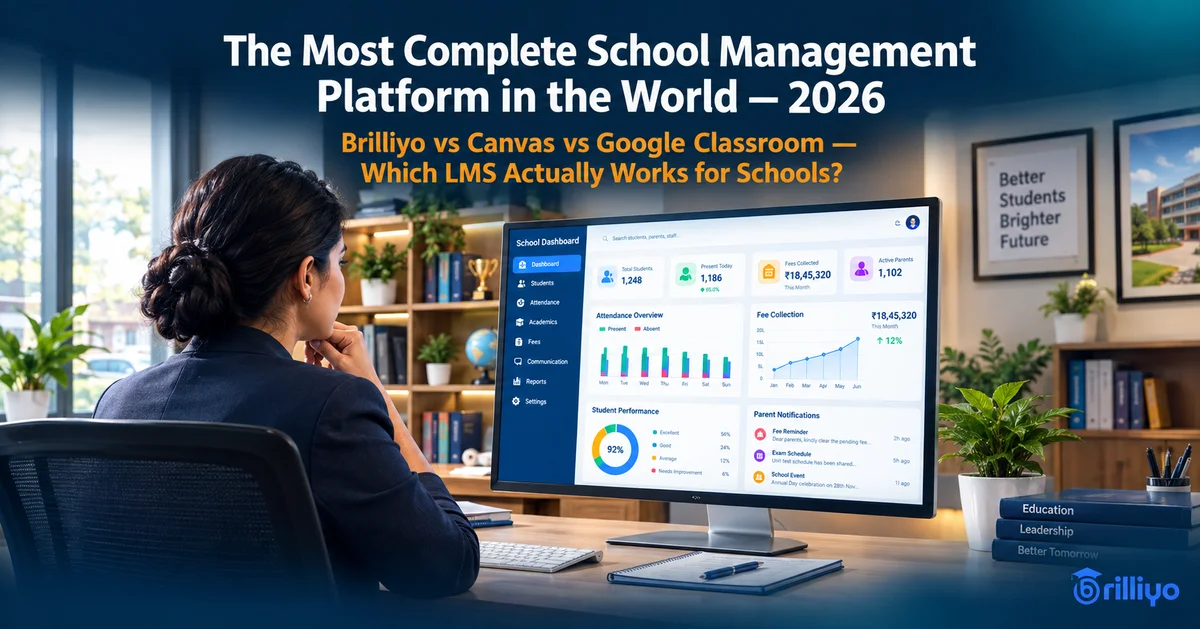
Best LMS Platforms in the World 2026 — And Why Brilliyo Is the Most Complete School Management Solution
Walk into any well-run school today and you will notice something that was not there ten years ago. The principal is not buried in paper files. The receptionist is not answering the same phone call for the third time this morning about fee due dates. The teacher is not carrying a bundle of registers under one arm and a stack of unmarked homework under the other.

Is ChatGPT Making Students Stop Thinking for Themselves?
A student opens ChatGPT, types in their homework question copies the answer. Submits it. This whole process takes than two minutes. They do not have to think. They do not have to struggle. They do not learn.

Why Indian Students Are Choosing Skills Over College Degrees
Something big is happening in India now. More and more young people in India are saying no to the college degree route and opting for learning skills instead. They are signing up for courses, vocational training, coding classes and special training for specific industries. And then they are getting jobs starting their own businesses and building careers that people with degrees are still waiting for.