
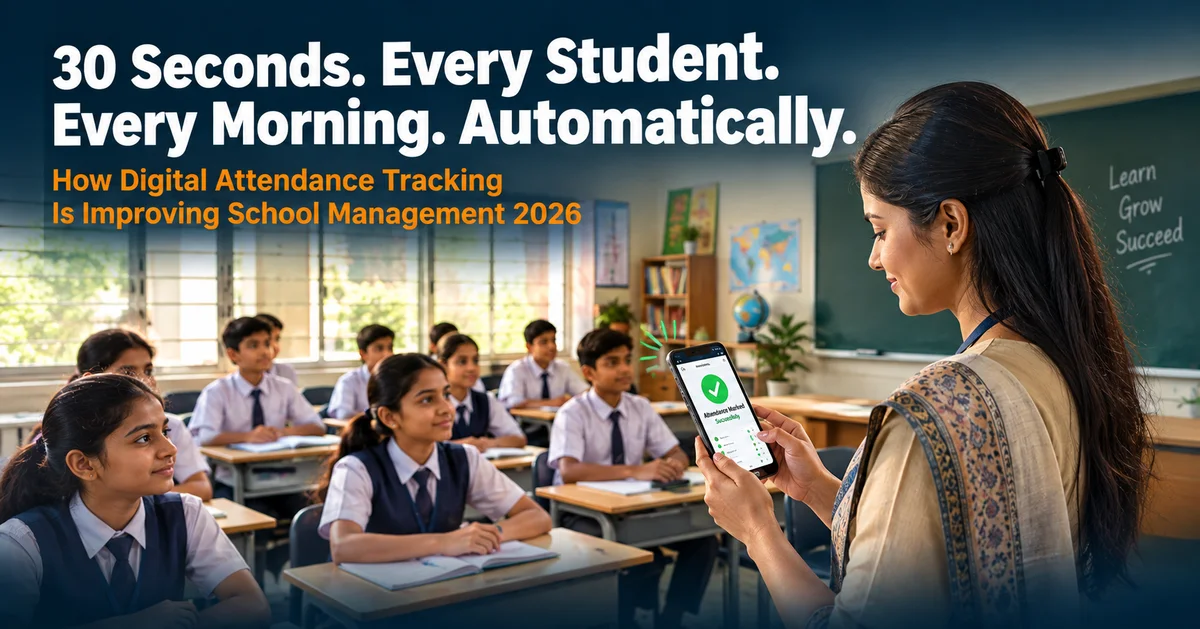
How Digital Attendance Tracking Is Improving School Management 2026
Gaurav Sharma
Blog content executive
There is a moment that happens in almost every classroom, in almost every school, at almost exactly the same time every morning.
The teacher asks for quiet. The register comes out. Names are called one by one. Students answer. Someone marks a tick or a cross in a column. The process takes five minutes on a good day and considerably longer when the class is restless, when a substitute teacher is covering, or when someone cannot find the register.
Five minutes does not sound like much. Multiply it by every class in the school, every day of the academic year, and you have something that adds up to a significant amount of teaching time spent on a purely administrative task. Then add the time it takes to compile attendance reports at the end of the week, follow up with parents about unexplained absences, identify students with patterns of poor attendance and communicate all of this to the people who need to know — and the true cost of manual attendance management becomes clearer.
Digital attendance tracking software was built to solve this problem. And the schools that are using it well in 2026 are discovering that the benefits go significantly further than simply saving time on the morning register.
What Is Actually Wrong With Manual Attendance
Manual attendance management has three problems that matter.
The first is speed. Taking attendance manually takes longer than it needs to. In a busy school day every minute counts. A process that takes five minutes manually and thirty seconds digitally is not a trivial difference when it happens across every class every day.
The second is accuracy. Paper registers get lost. Entries get made in the wrong column. A student marked present who was actually absent creates a record that nobody corrects because nobody noticed. These errors accumulate quietly over time and when they matter — when a parent disputes an absence record or when a safeguarding concern requires accurate attendance data — the errors cause real problems.
The third problem is communication. When a student is absent from school the people who need to know about it are the parent and the relevant school staff. In a manual system this communication is slow. Someone has to notice the absence, check whether the school has received an explanation from the family, and then — if no explanation has been received — contact the parent. By the time this happens it can be mid-morning or later. In the meantime the parent has no idea their child did not arrive at school.
This is not just an administrative inconvenience. For younger students especially the gap between a child leaving home and a school registering and communicating an unexplained absence is a genuine safety concern. Digital attendance systems close that gap dramatically.
How Digital Attendance Tracking Works in Practice
The mechanics of digital attendance tracking are straightforward. Teachers mark attendance on a device — a smartphone, a tablet or a computer — rather than in a paper register. The data goes directly into the school's management system. Everything else follows from there automatically.
Parents receive a notification the moment their child is marked absent. Not at the end of the day. Not when someone on the administrative team gets around to making a phone call. Immediately — within seconds of the teacher completing the register. The parent knows their child is not in school and they know before their working day has properly begun, when they can still do something about it.
The school's records update in real time. Any member of staff with appropriate access can see exactly who is present and who is absent across every class at any given moment. If a student who is marked absent has not been accounted for by a parent response the system flags it. The process that used to take a morning's worth of phone calls and register-checking can now be managed in minutes.
At the end of the week, the month, the term — reports are available instantly. Attendance by class. Attendance by individual student. Patterns over time. Which students have crossed the threshold that triggers a formal conversation with parents. Which classes consistently show high absence rates on particular days. All of this information exists in the system and can be accessed in seconds by anyone who needs it.
What This Means for Teachers
The most immediate benefit for teachers is time. Thirty seconds to mark attendance on a phone rather than five minutes with a register is a real and consistent saving — one that is felt every single day across every class.
But there is a subtler benefit that teachers who have made the switch often mention. When the administrative side of attendance management is handled automatically it stops occupying mental space. The teacher does not have to remember to send the register to the office. They do not have to field calls from the administrative team asking about a discrepancy in yesterday's register. They do not have to compose a message to a parent about an unexplained absence because the system has already sent the notification.
The attendance function simply works. And when a function simply works it disappears from the list of things a teacher has to think about.
🔗 Attendance is just one part of what a complete school management platform should handle. Read more: Best LMS Platforms in the World 2026 — And Why Brilliyo Is the Most Complete School Management Solution
What This Means for Parents
For parents digital attendance tracking changes the information gap that has always existed between a child leaving the front door and a school confirming they arrived safely.
In a manual system a parent whose child did not arrive at school might not find out until the school calls — which could be hours after the child was supposed to be there. In a digital system the parent receives a notification before most working days have properly started.
This matters practically. A parent who receives an immediate absent notification can respond immediately — confirming that the child is unwell and at home, contacting the school if the absence is unexpected, or taking whatever action the situation requires. The information reaches them when it is still actionable.
Beyond the safety aspect parents consistently report that real-time attendance notifications make them feel more connected to their child's school life. They know whether their child attended every lesson. They can see if a pattern of late arrivals or early departures is developing. They feel informed rather than dependent on the school to proactively communicate.
That sense of being informed is one of the foundations of the trust between a school and its families. Digital attendance tracking builds it quietly and consistently every single day.
What This Means for School Leadership
For principals and school leaders digital attendance tracking provides something that manual systems fundamentally cannot — a real time, accurate picture of what is happening across the school.
A principal who can open a dashboard on any device and see current attendance across every year group, who can instantly identify which classes are showing unexplained absences today and which students have a pattern that needs attention this week — that principal is managing their school with information rather than assumption.
Attendance data is one of the most important early warning systems a school has. A student whose attendance drops significantly is often a student who is struggling — academically, socially, at home. Catching that pattern early and responding to it makes a real difference. Missing it until the end of term report makes the response much harder.
Digital attendance tracking does not just speed up a morning administrative task. It gives school leaders the visibility they need to be proactive rather than reactive — to identify students who need support before the situation becomes serious.
How Brilliyo Handles Attendance Tracking
Brilliyo's digital attendance system is built into its complete school management platform — connected directly to student records, parent communication and school analytics rather than operating as a separate standalone tool.
Teachers mark attendance through the Brilliyo app on their smartphone or tablet. The process takes seconds. The moment attendance is marked the data is live in the system — visible to administrators, updating the school's records and triggering parent notifications for any unexplained absences.
Parents receive the notification through the Brilliyo parent app immediately. They can respond directly through the app — providing a reason for the absence, asking a question, or requesting a call from the school — without having to find a phone number and make a separate call.
The attendance dashboard in Brilliyo gives school leaders a live view of attendance across every class and year group. Weekly and monthly attendance reports are generated automatically — no manual compilation required. The system flags students whose attendance has fallen below configured thresholds so that the appropriate staff member can follow up proactively rather than discovering the issue in a termly review.
Because Brilliyo's attendance system connects to the rest of the school management platform the data is available alongside academic performance, fee status and communication history — giving a complete picture of each student rather than a fragment of it.
🔗 Just as attendance management benefits from automation, so does school fee collection. Read more: How Online Fee Management Software Is Saving Schools Hours Every Week
The Safeguarding Argument
It is worth being direct about the safeguarding dimension of digital attendance tracking because it is the most important argument of all.
Schools have a duty of care to their students. A significant part of fulfilling that duty is knowing — quickly and accurately — when a student is not where they are supposed to be and being able to respond to that information without delay.
A system that notifies parents within seconds of an unexplained absence, that flags unaccounted absences to the relevant staff member automatically, and that maintains a complete and accurate attendance record that can be accessed instantly in any situation — that system makes a school meaningfully safer. Not theoretically safer. Practically, operationally safer in ways that matter.
This is not a secondary benefit of digital attendance tracking. For many school leaders it is the primary reason to make the switch.
Conclusion
Digital attendance tracking is one of those improvements that seems straightforward on the surface and turns out to have consequences that reach further than expected.
The immediate benefits are real — faster marking, fewer errors, instant parent notifications, time saved across the school every single day. Those benefits alone justify the change.
But the deeper benefits are more significant. Real-time visibility for school leadership. Early identification of students who need support. Stronger communication with parents. A more robust safeguarding record. These are outcomes that go well beyond a more efficient morning register.
Brilliyo's attendance system is part of a complete school management platform — which means these benefits connect directly to improvements in how the school communicates, how it understands its students and how it makes decisions. The attendance data does not sit in isolation. It informs everything.
For any school that is still calling names and marking registers manually the question is not whether digital attendance tracking is better. The question is simply what has been holding the switch back — and whether that reason still holds up.
Frequently Asked Questions
What is digital attendance tracking software for schools?
Digital attendance tracking software allows teachers to mark student attendance electronically — through a smartphone, tablet or computer — rather than in a paper register. The data updates in real time, parent notifications go out automatically for unexplained absences and attendance reports are available instantly without any manual compilation.
How does digital attendance tracking improve school safety?
When a student is marked absent without explanation the system immediately notifies the parent and flags the absence to the appropriate school staff. This closes the gap between a child not arriving at school and the school and parents being informed — which is a meaningful improvement in safeguarding practice.
Can parents see their child's attendance through Brilliyo?
Yes. Parents receive real-time notifications through the Brilliyo parent app when their child is marked absent. They can see their child's full attendance history and respond directly through the app to provide an explanation or ask a question — without needing to call the school.
How long does it take teachers to mark attendance with Brilliyo?
Marking attendance through the Brilliyo app typically takes under thirty seconds per class. Compared to a manual register process that can take five minutes or more this represents a significant and consistent daily time saving across every teacher in the school.
Does Brilliyo generate attendance reports automatically?
Yes. Brilliyo generates weekly, monthly and termly attendance reports automatically. School leaders can access live attendance data across every class and year group at any time and the system flags students whose attendance has dropped below configured thresholds for proactive follow-up.
How does Brilliyo's attendance system connect to the rest of school management?
Brilliyo's attendance tracking is built into the complete school management platform — connected directly to student records, parent communication and school analytics. This means attendance data is available alongside academic performance and other information rather than existing in a separate system that has to be managed independently.
About the Author
Blog content executive
Creative and detail-oriented Blog Content Executive skilled in creating engaging, informative, and SEO-friendly blog content. Experienced in content research, keyword integration, blog planning, editing, and maintaining consistent brand tone. Passionate about creating valuable content that attracts readers, improves engagement, and supports website growth.
Related Articles
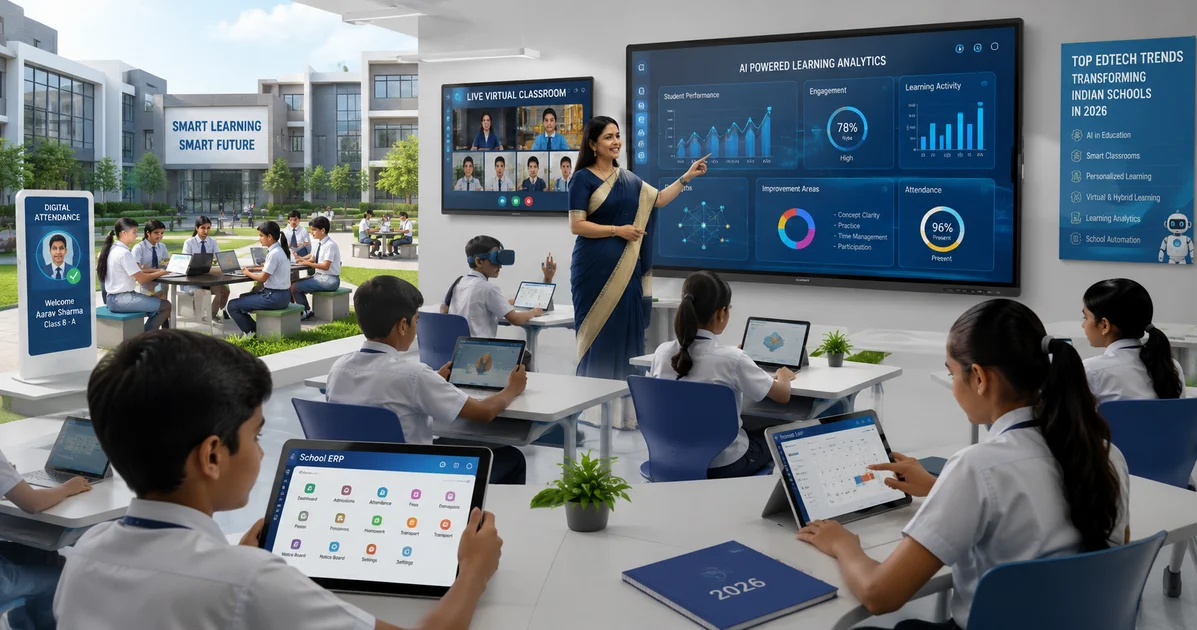
Top EdTech Trends That Are Changing Indian Schools in 2026
Education in India is changing a lot these days. This is because of the New Education Policy 2020 the fact that everyone is using things really fast and people want learning to be more about each student. So schools over India are thinking about how they teach students how they check what students know and how they help students. By 2026 technology will not just be something we use sometimes. It will be the way that schools teach students.
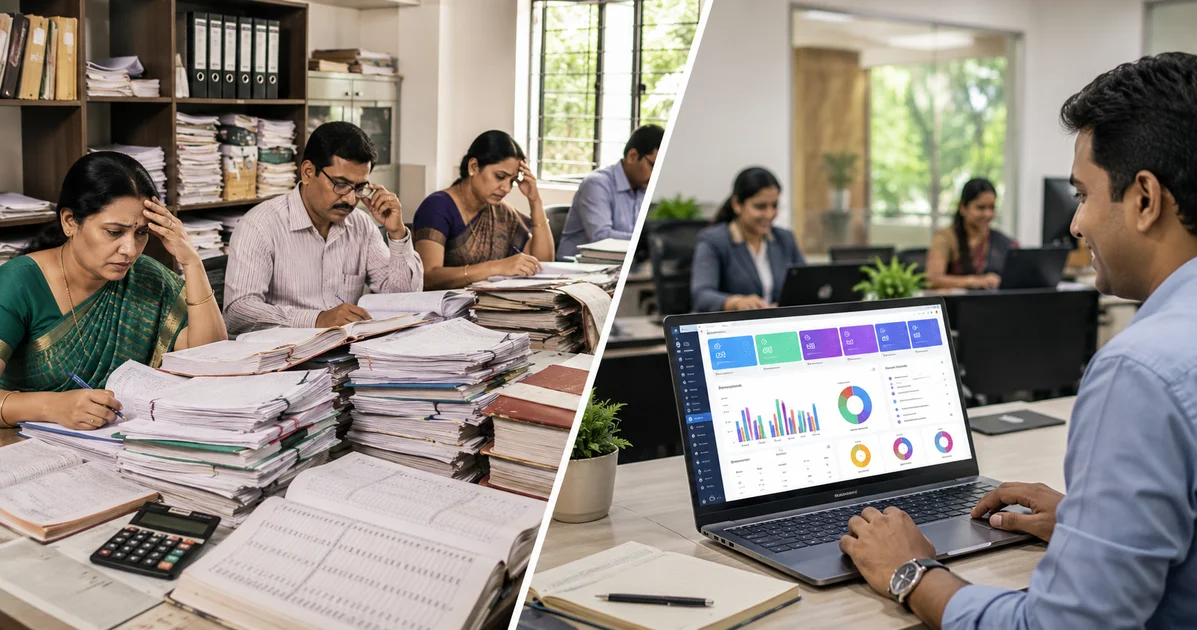
Top Challenges Schools Face Without School Management Software
Schools have to deal with a lot of people every day like students, teachers, parents and they have to do a lot of work to manage everything. Some schools still use ways of doing things like paper records, spreadsheets and traditional ways of talking to each other.
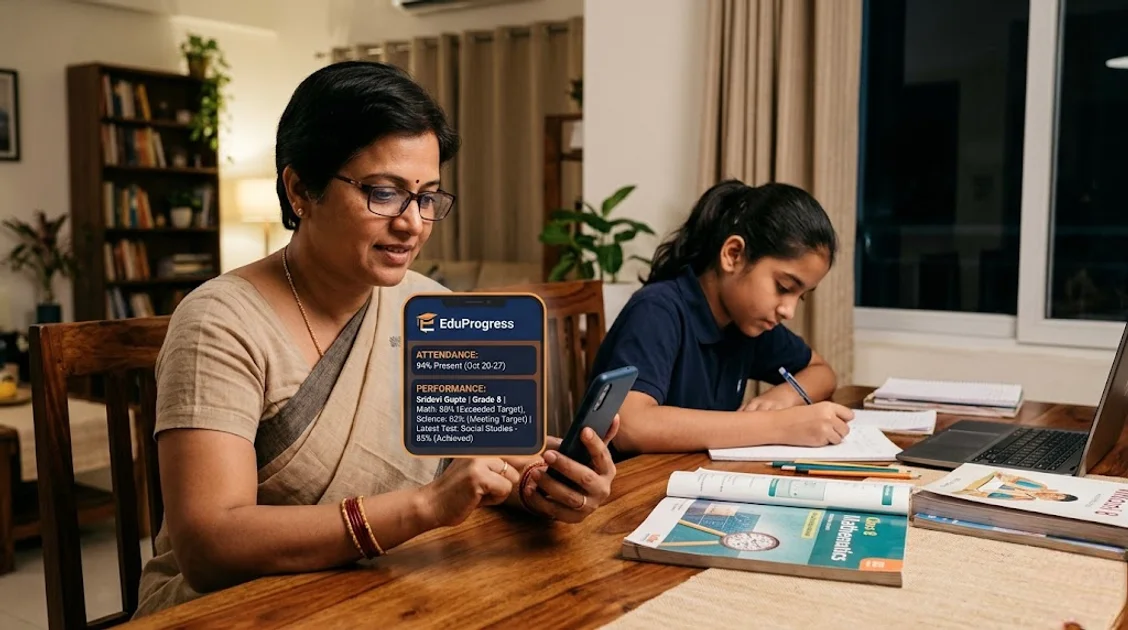
How Schools Can Reduce Dropout Rates Using Technology in 2026
Student dropout is a major challenge in schools today. Many students lose interest, struggle academically, or lack support—leading them to leave school early. In 2026, technology is helping schools solve this problem in smarter ways.