
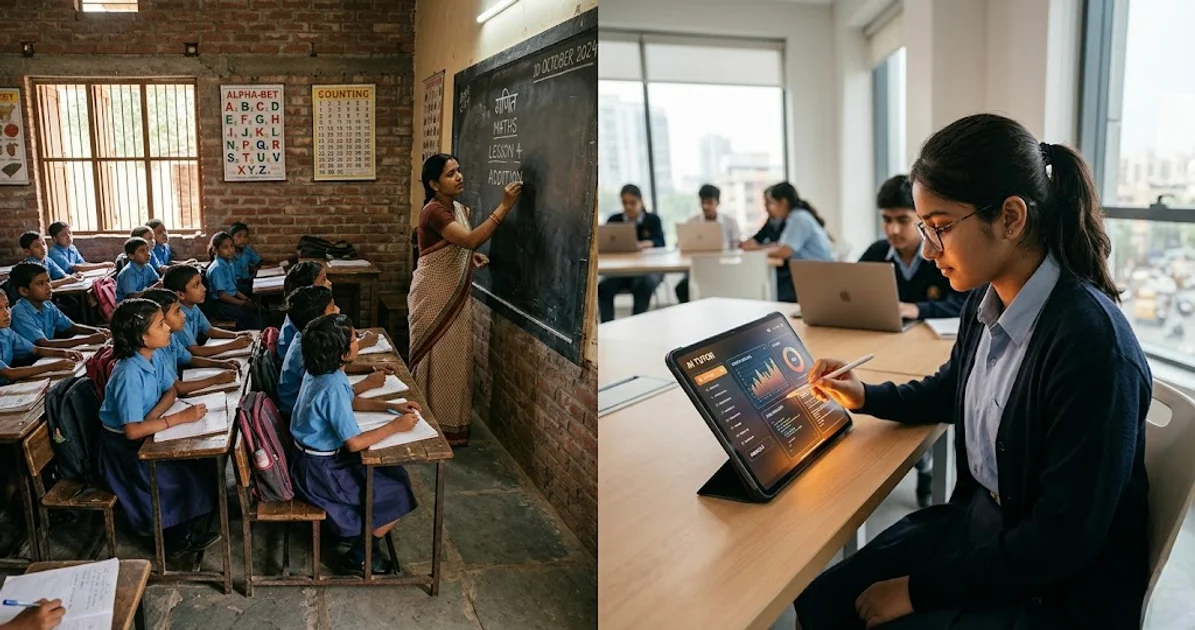
AI vs Traditional Teaching — What Works Best for Indian Students?

Esha
Content Writer & Education Technology Researcher
Every parent, teacher, and school administrator in India is asking the same question right now. Should schools rely on artificial intelligence to teach students, or is the traditional classroom still the best way to learn? The debate between AI teaching and traditional teaching is growing louder every year, and in 2026 it has become one of the most important conversations in Indian education.
The truth is that this is not a simple either-or question. To understand what actually works best for Indian students, we need to look at both approaches honestly.
What is AI-Based Teaching?
AI-based teaching uses artificial intelligence tools and platforms to deliver lessons, evaluate student performance, and personalize the learning experience. In an AI-powered learning environment, the system tracks how each student is progressing, identifies where they are struggling, and adjusts the content, difficulty level, and pace accordingly.
In India, AI-based teaching is showing up in several forms — adaptive learning apps, AI tutors that answer student questions around the clock, automated exam evaluation systems, and smart content platforms that recommend what a student should study next based on their performance history.
🔗 Want to see how live digital tools are changing classrooms? Read: Brilliyo Live Streaming vs Zoom, Google Meet and Teams
What is Traditional Teaching?
Traditional teaching is the classroom model that Indian schools have used for generations. A trained teacher stands in front of a group of students and delivers lessons through explanation, discussion, and interaction. Students ask questions, teachers respond, and learning happens through a human relationship built over time.
In the Indian context, traditional teaching also carries a strong cultural value. The guru-shishya relationship — the bond between teacher and student — is deeply rooted in how Indian society views education. A good teacher in India does far more than deliver content. They mentor, motivate, observe body language, understand emotional struggles, and shape character.
Where AI Teaching Has a Clear Advantage
AI teaching solves some very real problems that Indian schools face at scale. India has one of the largest student populations in the world, and the gap in education quality between urban and rural areas, or between well-funded and underfunded schools, is significant.
AI-powered platforms can give a student in a small town in Bihar access to the same quality of content and personalized feedback as a student studying in a top school in Mumbai. This kind of reach is simply not possible with human teachers alone.
AI also excels at patience and consistency. An AI tutor never gets tired, never loses focus, and can explain the same concept fifty times without frustration. For students who need extra repetition or who are too shy to ask questions in a classroom full of peers, AI provides a safe and judgment-free learning environment.
For exam preparation specifically, AI tools have proven extremely effective. They identify weak areas, generate practice questions, track improvement over time, and adapt difficulty levels based on real performance — something a single teacher managing forty students simply cannot do with the same precision.
🔗 Discover more on how technology is reshaping Indian classrooms: Top EdTech Trends That Are Changing Indian Schools in 2026
Where Traditional Teaching Has a Clear Advantage
No AI system has yet replicated what a skilled and caring teacher brings to a classroom. Human teachers read the room. They notice when a student is distracted, anxious, or struggling with something beyond academics. They build trust over months and years. They inspire students to believe in themselves.
For Indian students especially, motivation is deeply tied to relationships. A teacher who believes in a student can change the direction of that student's life. An algorithm cannot do that.
Traditional teaching also handles complex, nuanced subjects far better. Literature, philosophy, social studies, ethical debates, and creative subjects require discussion, interpretation, and human perspective. These are areas where AI still falls significantly short.
Group learning is another area where traditional classrooms win. Working through problems together, debating ideas, presenting in front of peers, and learning how to collaborate — these social and communication skills are built in classrooms, not on screens. In 2026, these skills are more important than ever for Indian students entering a competitive job market.
The Reality for Indian Students in 2026
Indian students are not choosing between AI and traditional teaching. They are using both, often without even realizing it. A student might attend school during the day for traditional lessons, use an AI-powered app in the evening for exam preparation, and receive automated feedback on a practice test before sleeping.
The schools that are seeing the best results in India right now are not the ones that have replaced teachers with technology. They are the ones that have given teachers better tools. When a teacher can use AI-generated data to understand exactly which students are falling behind in mathematics, they can focus their energy on those students instead of guessing. The AI handles the analysis. The teacher handles the relationship.
This combination — AI for personalization and scale, teachers for mentorship and motivation — is what works best for Indian students in 2026.
🔗 See how schools without the right tools struggle to keep up: Top Challenges Schools Face Without School Management Software
What This Means for Schools, Parents, and Students
For schools, the priority should be training teachers to work alongside AI tools rather than treating technology as a replacement. Schools that invest in both teacher development and smart technology will be the ones producing the best outcomes.
For parents, the question is not whether your child's school uses AI or traditional methods. The question is whether your child is getting personalized attention, genuine mentorship, and access to quality content. If a school is using AI to enhance these things, that is a good sign.
For students, the most important skill in 2026 is learning how to learn. AI tools can accelerate this process enormously, but only when a student has the discipline, curiosity, and critical thinking skills that good teachers build over years.
Conclusion
AI teaching and traditional teaching are not competitors. They are partners. For Indian students, the best outcomes come from schools and educators who understand the strengths of both approaches and combine them thoughtfully. AI brings scale, personalization, and data. Teachers bring humanity, inspiration, and relationship. Indian education in 2026 needs both — and the students who have access to both will be the ones who thrive.
Frequently Asked Questions
Is AI teaching better than traditional teaching for Indian students?
Neither is universally better. AI excels at personalization, scale, and exam preparation. Traditional teaching excels at mentorship, motivation, and building social skills. The best results come when both are used together.
Can AI replace teachers in Indian schools?
No. AI can support teachers by handling data analysis, personalized content delivery, and automated assessments. But the human relationship between a teacher and student — especially in the Indian cultural context — cannot be replicated by any AI system.
Which Indian students benefit most from AI-based learning?
Students in rural or underserved areas benefit enormously because AI gives them access to high-quality content and personalized feedback that may not be available locally. Students preparing for competitive exams like JEE or NEET also benefit significantly from AI-driven practice tools.
What is the best way for Indian schools to use AI in 2026?
The most effective approach is to use AI as a support tool for teachers — providing data on student performance, generating practice content, and handling repetitive evaluation tasks — while keeping teachers at the center of learning, mentorship, and classroom culture.
Are AI learning tools affordable for Indian schools and students?
Many AI-powered education platforms in India now offer affordable subscription plans for both schools and individual students. Several government initiatives under NEP 2020 are also working to expand access to digital learning tools across the country.
About the Author

Content Writer & Education Technology Researcher
Esha is a Content Writer specializing in EdTech, School ERP, Learning Management Systems (LMS), AI in Education, and digital learning. She creates SEO-focused educational content that helps schools and institutions embrace modern technology.
Related Articles
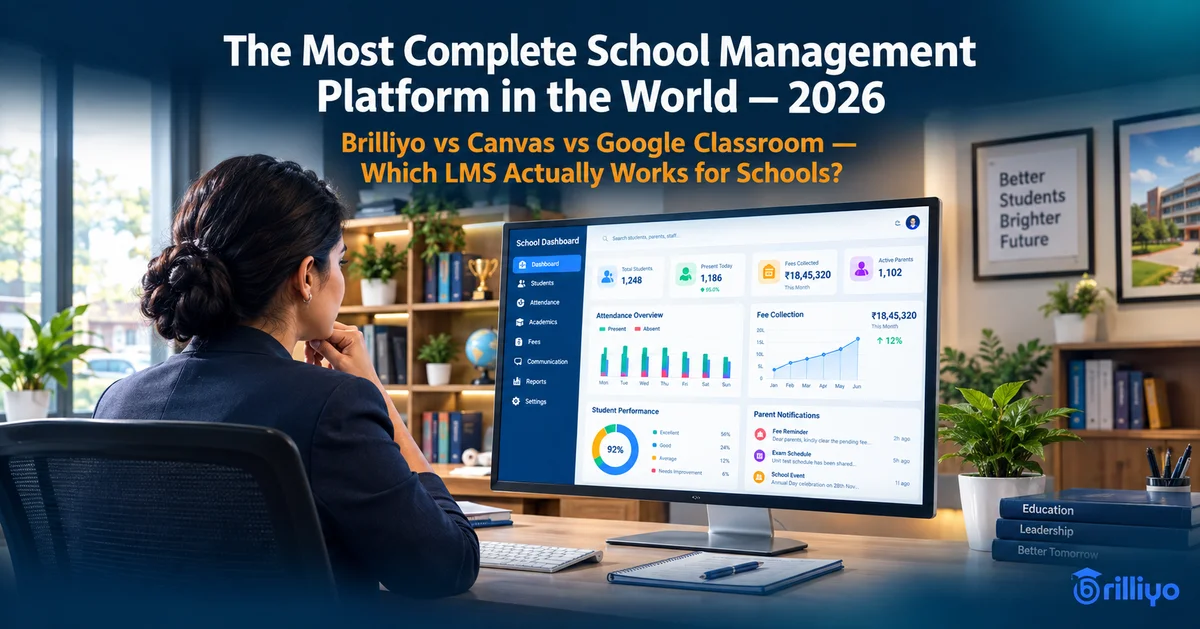
Best LMS Platforms in the World 2026 — And Why Brilliyo Is the Most Complete School Management Solution
Walk into any well-run school today and you will notice something that was not there ten years ago. The principal is not buried in paper files. The receptionist is not answering the same phone call for the third time this morning about fee due dates. The teacher is not carrying a bundle of registers under one arm and a stack of unmarked homework under the other.
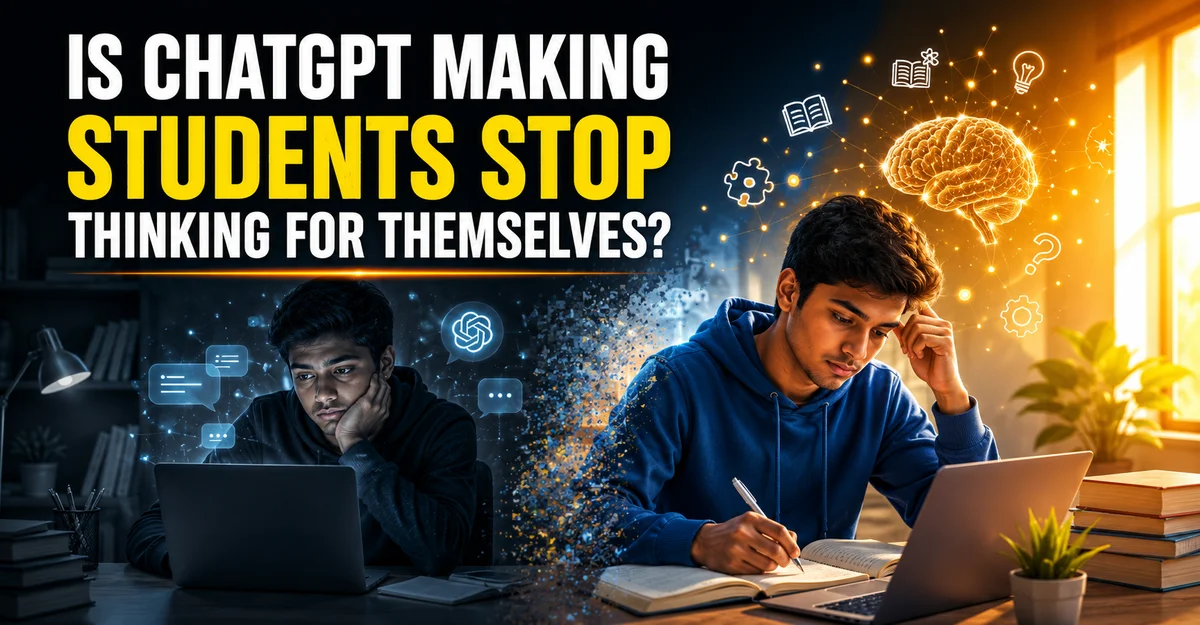
Is ChatGPT Making Students Stop Thinking for Themselves?
A student opens ChatGPT, types in their homework question copies the answer. Submits it. This whole process takes than two minutes. They do not have to think. They do not have to struggle. They do not learn.
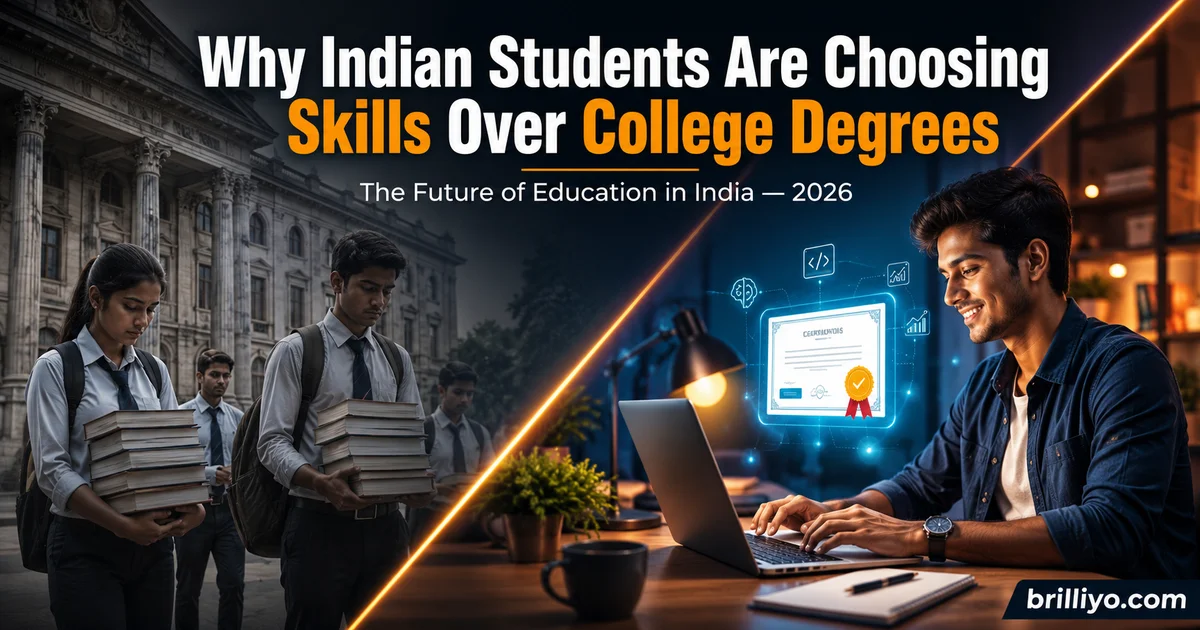
Why Indian Students Are Choosing Skills Over College Degrees
Something big is happening in India now. More and more young people in India are saying no to the college degree route and opting for learning skills instead. They are signing up for courses, vocational training, coding classes and special training for specific industries. And then they are getting jobs starting their own businesses and building careers that people with degrees are still waiting for.