
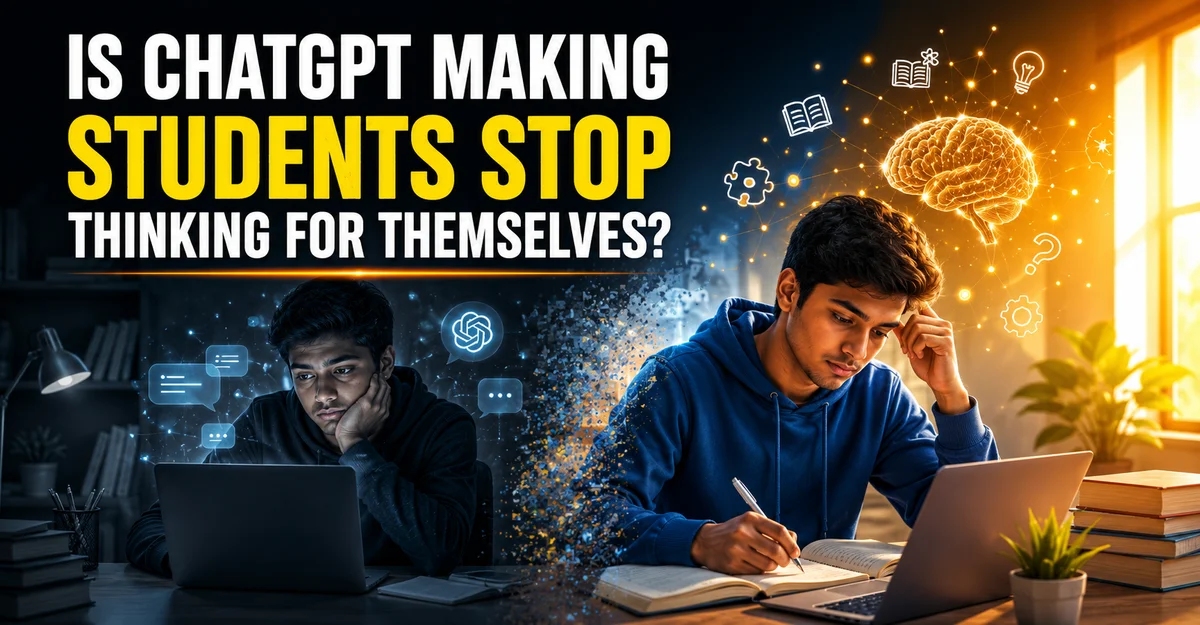
Is ChatGPT Making Students Stop Thinking for Themselves?

Brilliyo Editorial Team
Education Technology Experts
A student opens ChatGPT, types in their homework question, copies the answer and submits it. This whole process takes less than two minutes. They do not have to think. They do not have to struggle. They do not learn.
This is happening in millions of homes in India and worldwide every single day. It makes teachers, parents and education experts ask one important question — is ChatGPT quietly destroying the ability of students to think for themselves?
ChatGPT is really impressive. It can write essays, solve math problems, explain concepts, summarize chapters and generate answers to almost any question a student might have. For a student who is struggling at eleven at night with a deadline the next morning, it feels like a lifeline.
But there is a big difference. A tool that helps you learn is not the same as a tool that learns for you. This difference is very important.
When a student struggles with a problem they make mistakes. They backtrack. They try again. Finally they arrive at an answer. Something real happens in their brain. Their brain forms connections. They understand. They gain confidence. The struggle is not the obstacle to learning. The struggle is the learning.
When ChatGPT removes that struggle it also removes the learning that comes with it.
What Indian Teachers Are Saying
Teachers in schools and colleges across India are noticing something that worries them deeply.
On the surface assignments look better. Essays are well structured, answers are complete and vocabulary is sophisticated. But when students are asked to explain their work in class, many cannot.
They gave answers they did not understand. They copied ideas that were never theirs.
The problem is not just cheating. The bigger issue is that students are outsourcing their thinking so much that they are losing faith in their own ability to think. Some teachers say students now hesitate to attempt a question without first checking what ChatGPT says — even simple questions they could easily answer on their own.
The Other Side — ChatGPT as a Learning Tool
It is unfair to say ChatGPT is only bad for students. Used correctly it is one of the most powerful learning tools ever created.
A student who uses ChatGPT to understand a concept — asking follow-up questions, getting simpler explanations, exploring different angles — is using it the right way. This can help them understand a topic better than a single classroom explanation ever could.
Students preparing for exams like JEE or NEET use ChatGPT to generate practice questions, get instant feedback and explore topics beyond their textbooks. Used this way ChatGPT accelerates learning rather than replacing it.
The problem is not ChatGPT. The problem is using it as a substitute for thinking rather than a support for thinking.
🔗 Just like AI tutors, ChatGPT works best when it supports learning rather than replaces it. Read more: AI vs Traditional Teaching — What Works Best for Indian Students
Why This Is a Bigger Problem in India
India's education system puts enormous pressure on students to give correct answers — in exams, in class and in front of parents. The fear of being wrong, looking unintelligent or falling behind is deeply ingrained in how millions of Indian students experience school.
ChatGPT offers an escape from that fear. It is always right, always confident and always available.
For students who have always been judged on their output rather than their process, the temptation to let ChatGPT do the thinking is almost irresistible.
This is why the ChatGPT problem in India is not just about laziness or dishonesty. It is about a deeper crisis of confidence in students who have never been taught that thinking slowly, making mistakes and figuring things out is valuable — not shameful.
What Needs to Change
Banning ChatGPT in schools is not the solution. Students will always find a way to use it and ChatGPT is already deeply embedded in everyday life. What needs to change is how students are taught to use it.
Schools should design assignments that ChatGPT cannot easily answer — tasks that require personal experience, original opinion, local context and creative thinking. Teachers should assess how students think, not just what answers they produce. They should ask students to explain their reasoning out loud.
Parents need to have honest conversations with their children about the difference between using ChatGPT to learn and using it to avoid learning.
And students need to develop the self-awareness to recognize when they are genuinely learning and when they are just collecting answers.
🔗 This shift in how students learn is also changing what skills they actually need to succeed. Read more: Why Indian Students Are Choosing Skills Over College Degrees
Conclusion
ChatGPT is not the enemy of education. Intellectual laziness is — and ChatGPT makes intellectual laziness very easy.
The students who will do well in 2026 and beyond are not the ones who can use ChatGPT the fastest. They are the ones who use it wisely — as a tool to help them think, not as a replacement for thinking.
The ability to think for yourself, solve problems and make your own decisions is something no computer program can give you. You build it through effort, practice and the productive struggle that shortcuts will always deny you.
Frequently Asked Questions
Is ChatGPT bad for students?
ChatGPT is not bad for students. It can genuinely help students learn when used to support their thinking. The problem is when students use ChatGPT to do all the thinking for them instead of using it as a tool to help them think better.
Are schools banning ChatGPT?
Some schools and colleges in India have restricted ChatGPT use during exams and assignments. However it is very difficult to enforce a complete ban. Most educators now believe the better approach is teaching students how to use AI tools responsibly rather than banning them outright.
How can parents tell if their child is relying too much on ChatGPT?
A simple test — ask your child to explain their homework or assignment in their own words after they finish it. If they cannot explain what they submitted, it is likely they used ChatGPT without actually engaging with or understanding the content.
What is the best way for students to use ChatGPT?
Students should use ChatGPT to understand concepts they are confused about, generate practice questions, explore topics more deeply and get feedback on their own thinking — not to generate answers they submit as their own work.
Will ChatGPT make human thinking less important in the future?
The opposite is likely true. As AI handles more routine thinking tasks, the ability to think creatively, critically and independently will become more valuable — not less. Students who develop strong thinking skills today will have a significant advantage in any future job market. ChatGPT will handle some of the work. It will not replace the way humans think.
About the Author

Education Technology Experts
The Brilliyo editorial team shares insights on educational technology, learning management, and institution growth.
Related Articles
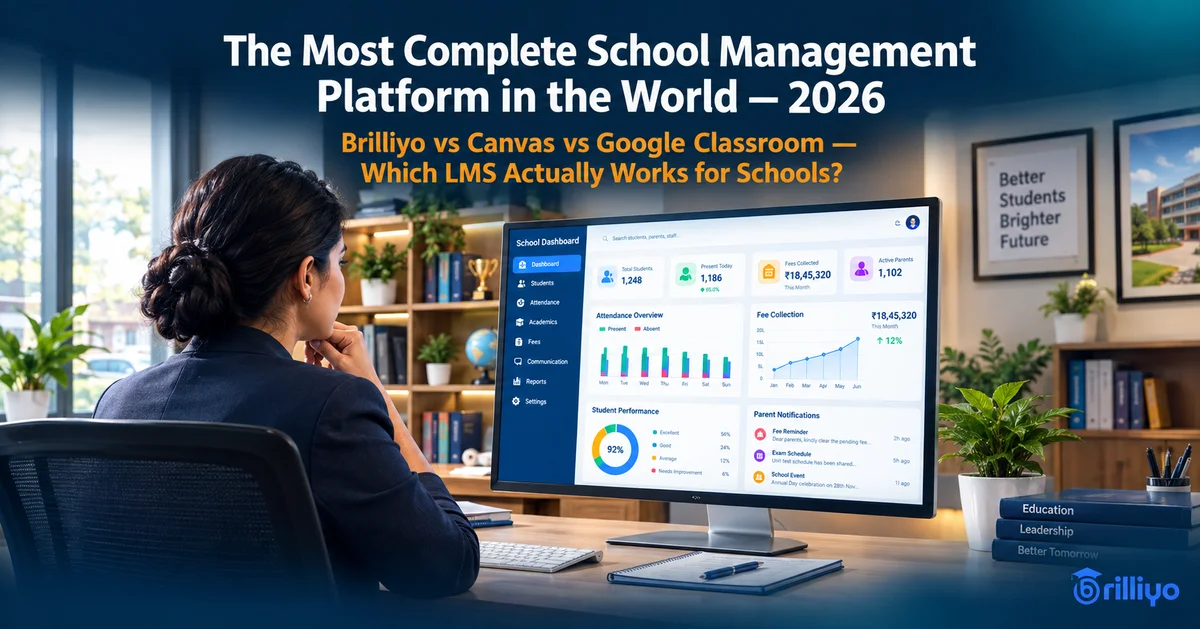
Best LMS Platforms in the World 2026 — And Why Brilliyo Is the Most Complete School Management Solution
Walk into any well-run school today and you will notice something that was not there ten years ago. The principal is not buried in paper files. The receptionist is not answering the same phone call for the third time this morning about fee due dates. The teacher is not carrying a bundle of registers under one arm and a stack of unmarked homework under the other.

Why Indian Students Are Choosing Skills Over College Degrees
Something big is happening in India now. More and more young people in India are saying no to the college degree route and opting for learning skills instead. They are signing up for courses, vocational training, coding classes and special training for specific industries. And then they are getting jobs starting their own businesses and building careers that people with degrees are still waiting for.
AI vs Traditional Teaching — What Works Best for Indian Students?
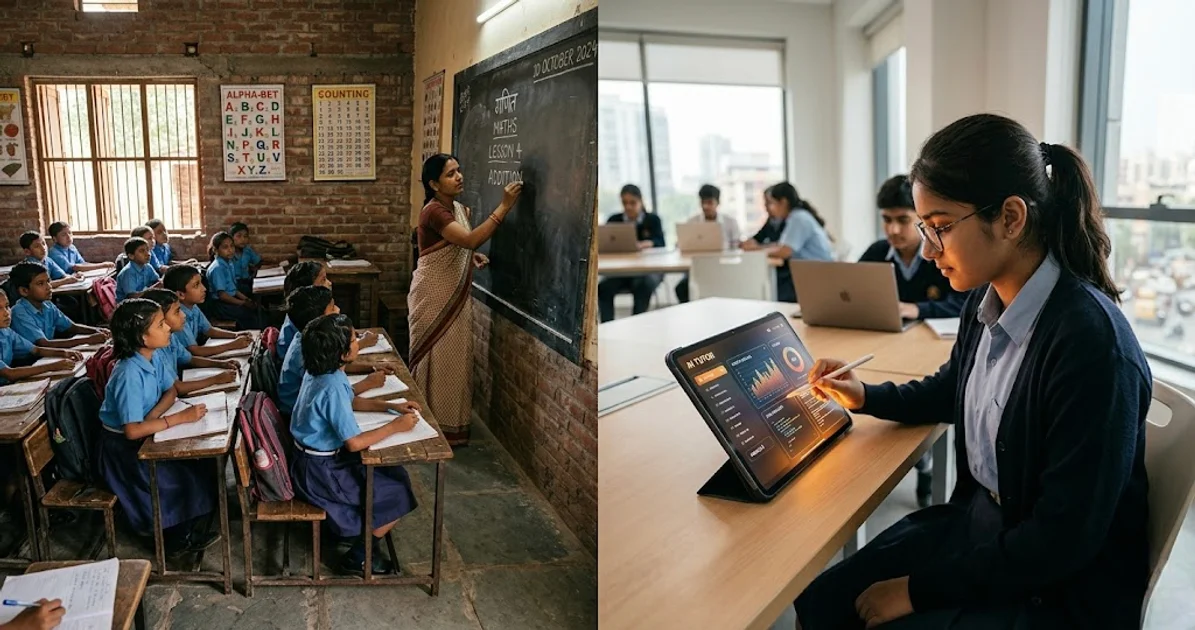
Every parent, teacher and school administrator in India is wondering about the thing right now. Should schools use intelligence to teach students or is the old way of teaching in a classroom still the best way to learn? The argument about using intelligence to teach and the traditional way of teaching is getting louder every year and in 2026 it has become a very important topic in Indian education.