
How Digital Student Records Are Replacing Paper Registers in Schools

Esha
Content Writer & Education Technology Researcher
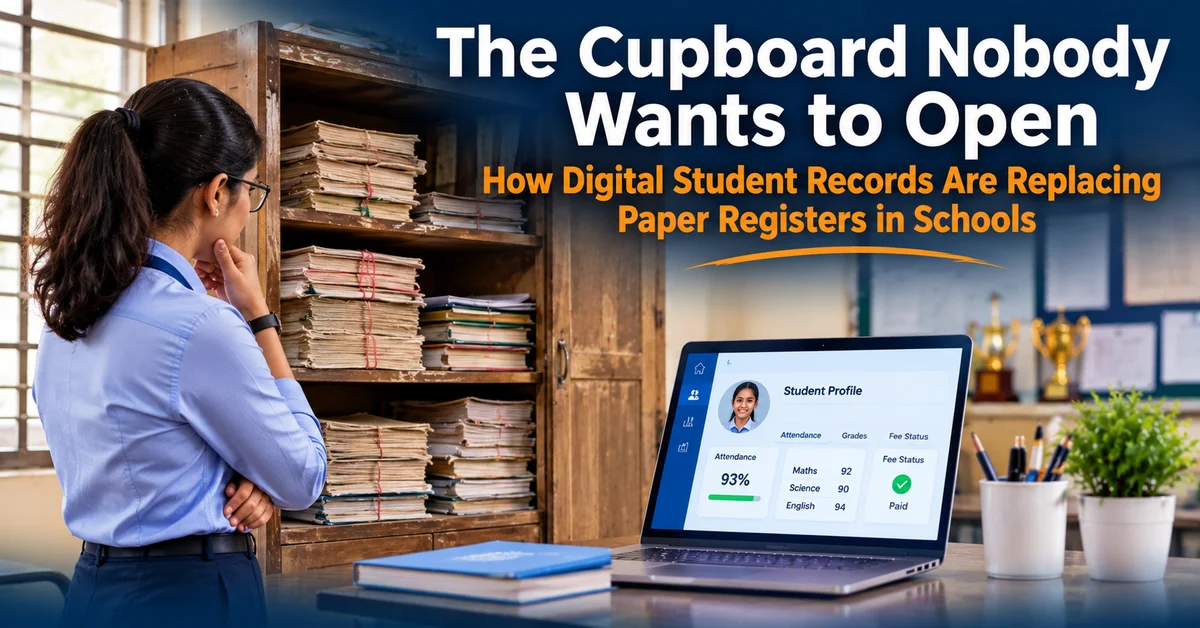
Every school has a cupboard somewhere that nobody likes to open.
Inside are registers from years ago, thick admission books with cracked spines, attendance sheets held together with rubber bands, and folders where one student’s information is spread across three different pages. The handwriting changes from one decade to the next. Some entries are in pencil. Some are crossed out and rewritten.
Those registers did their job for a very long time, and the people who filled them in were careful. But the world around them has changed. Parents expect an answer in seconds. Teachers have more to track than a register was ever designed for. And a single water leak or lost key can wipe out years of records.
This is why more schools, in more countries, are moving their student records onto digital systems. Here is what that move really involves.
What a paper register can and cannot do
A register is good at one thing: recording a fact in one place at one moment. A teacher writes a tick. The office writes an admission number. That is where its usefulness ends.
It cannot tell you at a glance which students have missed more than five days this month. It cannot warn you that a child’s marks have been slipping for three weeks. It cannot send a message to a parent. It cannot be in two places at once, so when the nurse needs a medical note and the finance team needs a fee record and the class teacher needs the attendance history, they queue for the same folder.
Paper also forgets. People move house and the old address stays in the book. A phone number changes and only one of the three lists is updated. Over time, the register and the real world quietly drift apart.
What “digital student records” actually means
It does not mean scanning every page into a folder of PDFs. That only moves the cupboard onto a computer.
A real digital record system keeps one profile for each student. That profile holds personal and family details, emergency contacts, admission history, attendance, grades, health notes, fee records and every message sent to the family. When something changes, it changes once, and everyone sees the updated version.
The important word is connected. Attendance marked by a teacher appears in the student’s profile on its own. A fee payment updates the balance without anyone re-typing it. A note from the school nurse is available to the people who are allowed to see it, and hidden from those who are not.
What changes for teachers
For teachers, the first change is time. Marking attendance on a phone takes a fraction of the time that calling out names and filling a register does, and it can be done as the class settles rather than after it.
The second change is less obvious. Teachers stop carrying information in their heads or in personal notebooks. Before a parent meeting, they can see attendance, recent results and earlier communication in one place, instead of searching through three sources and hoping nothing is missing.
There is also less end-of-term pressure. When records are kept up to date daily, there is no frantic week of copying marks from one sheet to another before reports are due.
What changes for parents
Parents notice the change most in how quickly the school can answer them.
A question about attendance, a fee balance or an upcoming exam used to mean a phone call, a wait and sometimes a callback the next day. With digital records, the answer is available straight away, and in a good system the parent can see much of it themselves.
There is a quieter benefit too. When a school responds accurately and without hesitation, parents trust it more. Few things build confidence like being given the right answer the first time.
What changes for school leaders
Principals gain something paper cannot give them: a current picture. Instead of asking five people for five reports, they can see attendance across classes, outstanding fees and patterns in performance whenever they need to.
This matters most for catching problems early. A student whose attendance is falling and whose grades are dropping at the same time is usually a student who needs help. On paper, those two facts sit in different books and are rarely read together. In a digital record, they are side by side.
🔗 Some education systems are already moving away from judging a child by a single number. Read more: Mizoram Has Stopped Ranking Its Toppers, and the Whole Country Is Watching
The safety question
People sometimes worry that digital records are less secure than paper. The truth is that paper has almost no security at all. A register left on a desk can be read by anyone. A folder carries no record of who opened it. A fire or flood ends the record permanently.
A well-built digital system works the other way. Access is controlled by role, so a teacher sees what teaching requires, the nurse sees health notes and finance sees fee records. Data is encrypted. Logs show who viewed or changed a record. Backups mean a damaged server or a lost laptop does not mean lost history.
Student data includes minors, medical details and family finances, so schools carry a real responsibility to protect it. Digital systems make that responsibility far easier to meet than a cupboard of paper does.
How to make the switch without chaos
Most schools that struggle with this move do so for avoidable reasons. These steps help.
Start with clean data. Duplicates, outdated addresses and inconsistent spellings do not fix themselves when moved into a new system. Spend time cleaning before importing.
Move in stages if you need to. Many schools begin with admission details and attendance, then add fees, health records and communication once staff are comfortable.
Train the people who will use it daily. The teacher who marks attendance forty times a term matters more to the project’s success than the administrator who signs the contract.
Keep paper as a backup for a short, defined period. A few weeks of running both in parallel reassures everyone, but set an end date. Running both forever defeats the purpose.
Choose a connected platform. If student records, attendance, fees, parent communication and exams are separate tools, you will end up re-entering the same information in several places and recreating the old problem on screens.
How Brilliyo handles it
Brilliyo gives every student a complete digital profile from the day they enrol. Personal and family details, academic history, attendance, health information, fee records and communication history all sit in one place.
There is no separate step to keep it current. When a teacher marks attendance, it appears in the profile. When a payment is recorded, the balance updates. When a message goes to a parent, it is logged. The profile fills itself in as the school does its normal work.
Access is controlled by role, data is stored on encrypted cloud infrastructure, and the platform works for schools of any size and in any country, from a few hundred students to several thousand.
Conclusion
Paper registers served schools well for generations, and nobody should look down on the people who kept them carefully. But keeping a record and being able to use it are different things, and the second is what schools now need.
Digital student records answer questions faster, catch problems earlier, protect data better and save staff hours that can go back into teaching. The switch takes planning and some patience, but schools that make it rarely want to return to the cupboard.
If your school is still searching through folders to answer a simple question, the cupboard is probably telling you something.
Frequently Asked Questions
How are digital student records different from paper registers?
A paper register records a fact in one place. A digital record system keeps one connected profile per student that holds attendance, grades, health notes, fees and communication together, updates in real time and can be accessed by authorised staff from any device.
Are digital student records safe?
Yes, when the system is properly built. Access is limited by role, data is encrypted, access logs show who viewed or changed records and backups protect against loss. Paper records usually have none of these protections.
What should schools do with old paper records after digitising?
Schools should follow the legal retention rules in their country. Many keep paper copies of certain documents for a set period after digitising and then dispose of them securely.
Does Brilliyo work for schools outside India?
Yes. Brilliyo is built for schools globally, regardless of country, curriculum or size.
About the Author

Content Writer & Education Technology Researcher
Esha is a Content Writer specializing in EdTech, School ERP, Learning Management Systems (LMS), AI in Education, and digital learning. She creates SEO-focused educational content that helps schools and institutions embrace modern technology.
Related Articles
How Real Time Analytics Is Helping School Principals Make Better Decisions
There is a particular kind of frustration that school principals know well. It is the frustration of being responsible for something you cannot fully see. You are responsible for the attendance of every student in your school. But the information about who is absent today, which classes have concerning patterns this term, which individual students have crossed a threshold that should trigger a conversation — that information is spread across registers, spreadsheets and individual teacher records. To get a complete picture you have to ask several people, wait for them to compile their data and then sit down with a report that was accurate as of last Thursday.
Why Schools Need a Student Information Management System in 2026
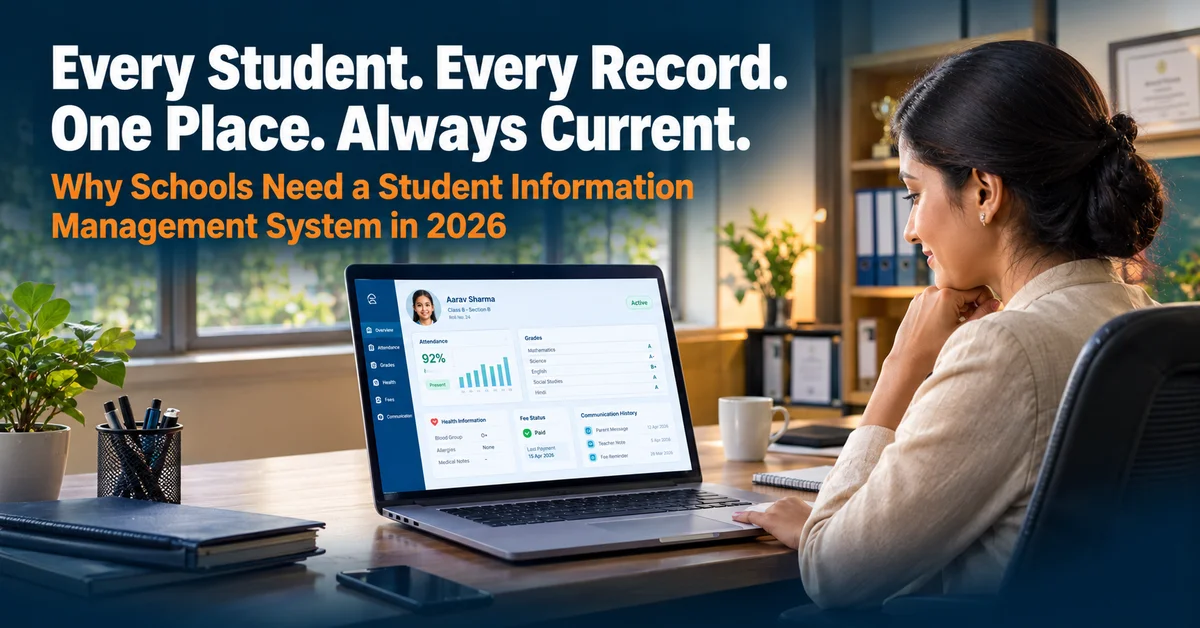
Somewhere in a school office right now someone is looking for a file. It might be a student's medical record that the school nurse needs urgently. It might be last year's attendance history that a teacher needs before a parent meeting this afternoon. It might be a fee payment record that a parent is disputing and the finance team cannot find quickly enough to give a confident answer.
Why Practical Learning Is Replacing Memorization
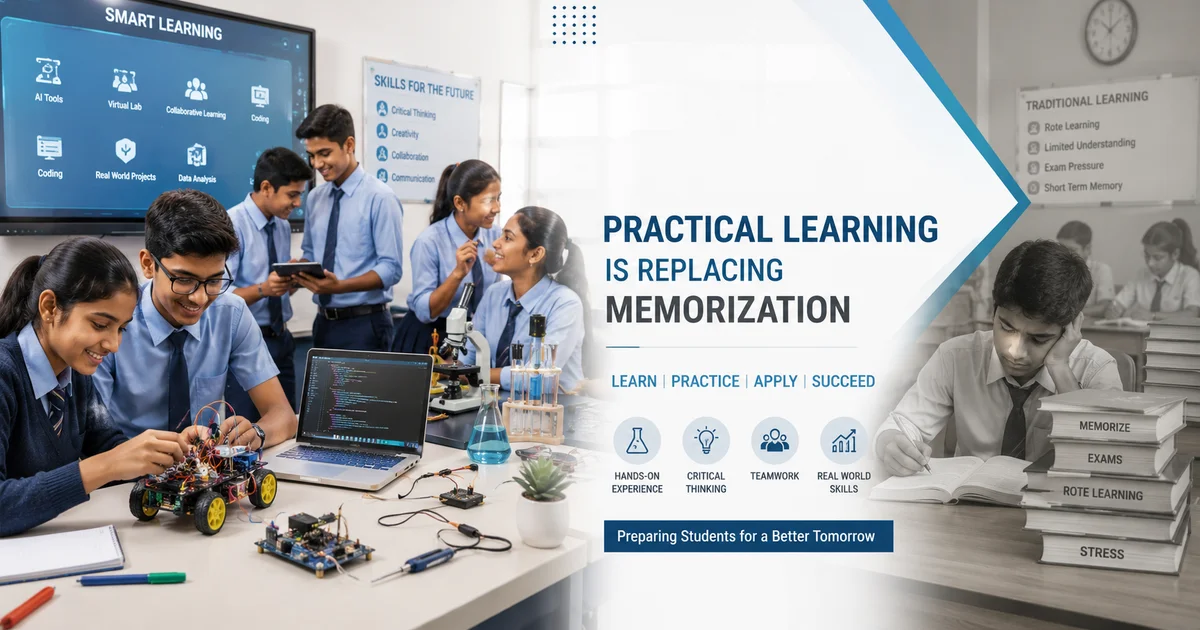
Education is changing very fast. Earlier students were mostly expected to memorize answers, formulas, and textbook definitions. Success in school was often measured by how much students could remember during exams.