

Mizoram Has Stopped Ranking Its Toppers, and the Whole Country Is Watching

Brilliyo Editorial Team
Education Technology Experts
Mizoram Has Stopped Ranking Its Toppers, and the Whole Country Is Watching
By Brilliyo Editorial Team | Updated: November 2026 | 6 min read
Meta Description: Mizoram has ended merit lists and distinctions in its Class 10 and 12 board results. Here is why the state made this choice, who opposes it and what the rest of India can learn from it.
Every year, in the week board results come out, Indian newspapers print the same pages. Photographs of toppers holding sweets. A list of the top ten. Percentages with decimals, as if the difference between 98.4 and 98.6 says something about a person.
In one corner of the country, that ritual has been switched off.
Earlier this year, the Mizoram Board of School Education announced that it would stop declaring Class 10 and Class 12 results with a merit list, ranks, distinctions or divisions. Students would get their results. Nobody would be placed first.
The decision was not a quiet administrative tweak. It started an argument that is still going on.
What Exactly Changed?
The School Education Minister, Vanlalthlana, said the board would move away from the traditional way of announcing results. No top ten. No rank. No distinction or division labels attached to a student’s name.
The stated aim was to push the system toward quality learning and away from rote memorisation. Reports described the broader direction as a shift toward experience-based learning.
This sits alongside other changes the state has been making. Mizoram restructured its academic year in response to its climate, its hilly terrain and the way people actually live there, a decision that was reported to have broad community support. Schools were also allowed to have their own uniforms. The state board announced plans for a common examination in Class 9 from a new academic session.
Taken together, these look less like random reforms and more like a state deciding it does not need to copy a template designed for somewhere else.
Why a Top Ten List Does Damage
Nobody wants to say it out loud, but a merit list does something unusual. It tells ten children they are the best and quietly tells the remaining lakhs that they are not.
Think about what happens in a school preparing for it. Teachers spend extra time on the few who might make the list. Parents compare. Coaching centres print the names of toppers on hoardings, and the hoardings become the real syllabus for the next batch: be like them, or be nobody.
The pressure does not stay in Class 12. It travels backwards into Class 8 and Class 5, into homework, into how children feel about being wrong. Many of the problems people write about in Indian education, the exam anxiety, the memorising, the loneliness of the high scorer, start from this single obsession with rank.
Removing the list does not remove exams. Students will still be tested and results will still exist. What goes is the public ordering of children, which was never part of learning anyway.
The Objections Are Real
It would be dishonest to present this as a decision everyone welcomed. The Mizo Zirlai Pawl, the state’s students’ body, publicly urged the government to reconsider.
Their concern is easy to understand. For a student from a modest family, a top rank can open doors: scholarships, recognition, a first line on an application. For a first-generation learner, a distinction is proof that the effort was worth it. Take away the label and you may also take away the one thing that made a hard-working child visible.
There is also a practical question about what replaces the ranking. Colleges and scholarship bodies still need ways to choose between applicants. If the board does not provide a distinction, someone else will build their own filter, and that filter may be less fair than the one it replaced.
These are fair objections. The strongest answer to them is not slogans but evidence, which will take a few years to appear.
What Mizoram Is Doing Around the Reform
A reform of results only works if the rest of the system supports it. Some of what the state has been doing in recent months suggests it knows this.
The Education Minister announced plans to recruit 100 regular primary teachers this year, and said the board was working to let in-service teachers with more than five years of service left appear for the Mizoram Teacher Eligibility Test before 2028. Better early teaching matters more than any change to how Class 12 is declared.
The government is also working to bring upgraded schools into operation from the 2026-27 academic session, which expands access to higher classes closer to where children live.
In September, the minister visited the Vidya Samiksha Kendra in Gandhinagar, Gujarat, to study its technology-driven monitoring of schools and look at whether a similar model could work in Mizoram. At a conclave of northeastern states, he argued that the Centre should frame education policy keeping in mind the region’s distinct geography and economic conditions, rather than applying one approach designed for larger states.
And Mizoram is not starting from a weak position. It has been recognised on International Literacy Day, and the state has been declared India’s first fully literate state. Mizoram University has also been climbing in international rankings, including recognition for its green campus in the UI GreenMetric World University Rankings 2026.
A state with high literacy is, in a sense, free to ask the next question: now that nearly everyone can read, what are we teaching them to do with it?
What the Rest of India Can Take From This
Most states will not copy Mizoram tomorrow, and they should not. But some lessons travel.
First, a board is allowed to question its own rituals. The merit list feels permanent only because it has always been there.
Second, results and learning are different things. A system can measure carefully without ranking publicly.
Third, any reform needs a plan for the people who lose something from it. If the ranking disappears, scholarships and admissions need clear ways to recognise effort. Otherwise, the reform quietly hurts the students it was meant to protect.
Fourth, local context matters. A state with hills, heavy rain and scattered villages may need a different calendar and different priorities from a plains state with large cities.
Finally, schools themselves need tools to track progress without relying on rank. Digital records of attendance, assignments and assessments, kept consistently across the year, give teachers and parents a far richer picture of a child than a single number on a board result ever did.
For schools looking to manage student records, academic progress, attendance and other essential information in one place, a structured digital system can help. Explore this guide to the Best Student Information Management Software for Schools Globally to understand how digital student information management can support more informed school decisions.
Conclusion
Mizoram’s decision will not be judged this year. It will be judged when today’s Class 10 students reach college and work, and when we can see whether they learned more, stressed less and found their way as well as the toppers of the old system did.
What it has already done is something valuable: it has made the rest of the country say aloud a question we usually avoid. Why do we rank children at all?
Whatever the answer turns out to be, a state that asks the question publicly and tries something different deserves attention from every parent, teacher and policymaker who has ever felt that the number on the marksheet was not the whole story.
Frequently Asked Questions
What has Mizoram changed in its board results?
The Mizoram Board of School Education announced that results for Classes 10 and 12 will be declared without a merit list, ranks, distinctions or divisions.
Why did Mizoram stop awarding distinctions and ranks?
The stated aim is to encourage quality learning and experience-based education instead of rote memorisation and competition over rank.
Who opposed the decision?
The Mizo Zirlai Pawl, the state’s students’ body, urged the government to reconsider, arguing that ranks and distinctions help students gain recognition and opportunities.
What other education changes is Mizoram making?
The state has restructured its academic year to suit its climate and terrain, announced plans for a common Class 9 examination, plans to recruit 100 primary teachers this year, and is bringing upgraded schools into operation from the 2026-27 session.
Is Mizoram a highly literate state?
Yes. Mizoram has been declared India’s first fully literate state and was recognised at the national observance of International Literacy Day.
Why did the Mizoram minister visit Gujarat?
He visited the Vidya Samiksha Kendra in Gandhinagar to study its technology-driven school monitoring system and explore whether a similar model could be adopted in Mizoram.
About the Author

Education Technology Experts
The Brilliyo editorial team shares insights on educational technology, learning management, and institution growth.
Related Articles
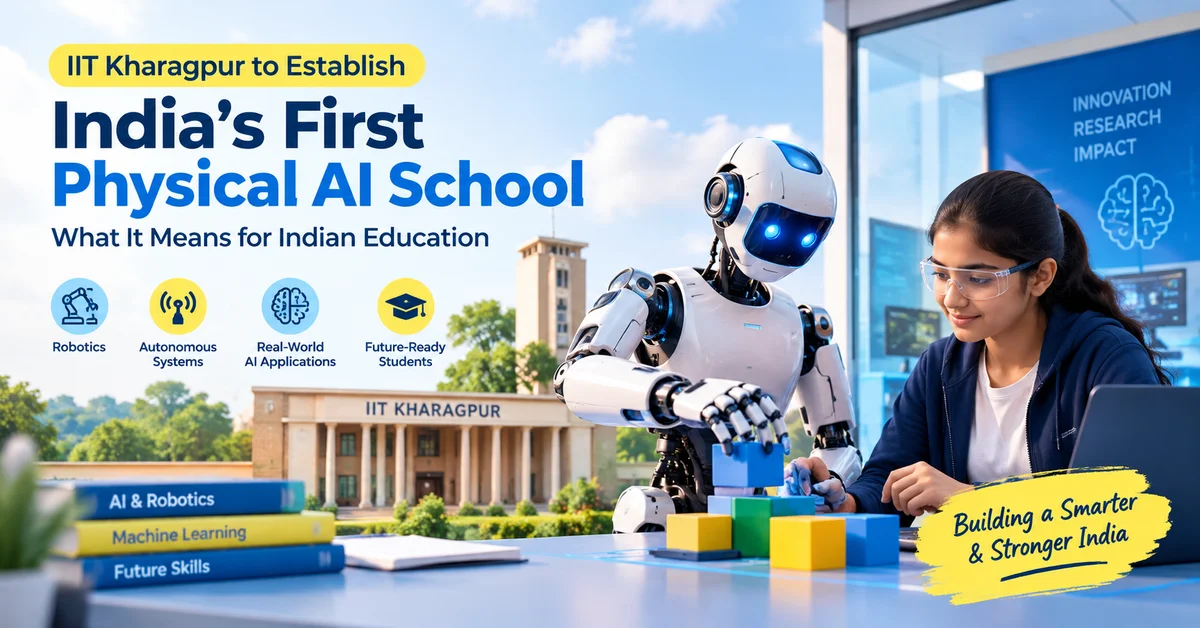
India’s First Physical AI School Is Coming — And It Changes Everything About How We Think About Education
There is a version of artificial intelligence that most people are familiar with by now. It lives on screens. It answers questions, generates text, recommends content and makes decisions in the background of digital systems. It is impressive, it is useful and it is already reshaping how India’s schools and universities are thinking about education.
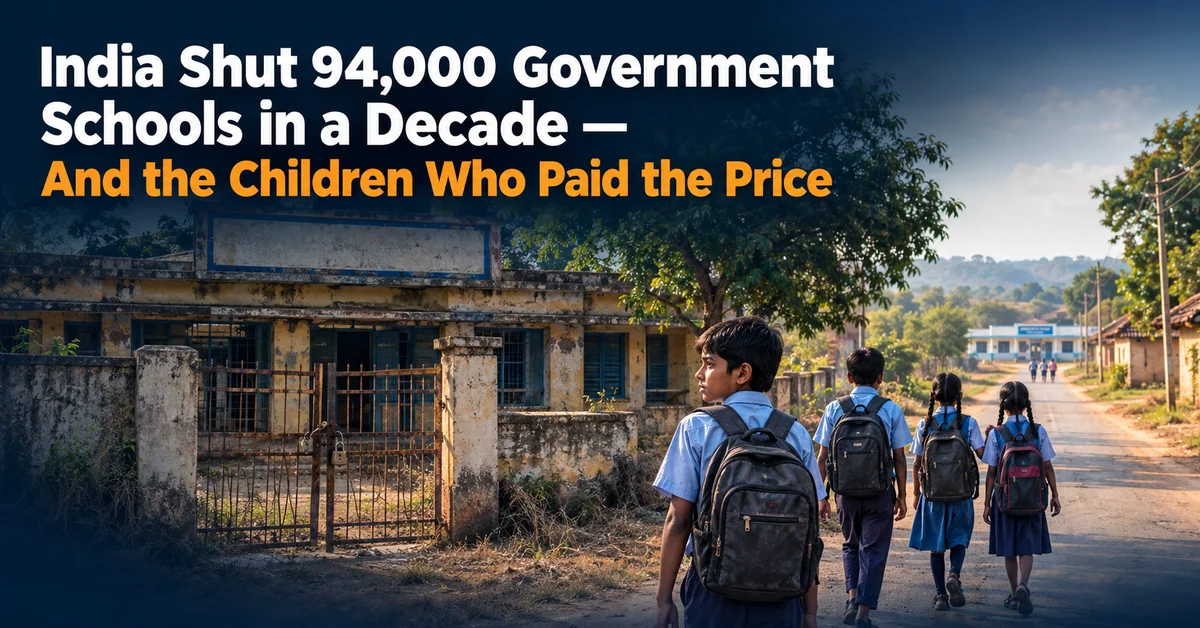
India Shut 94,000 Government Schools in a Decade — And the Children Who Paid the Price
That is not a statistic that is easy to sit with. Every single day for the past ten years, somewhere in India, a government school closed its gates — permanently. The building may still stand. The classrooms may still exist. But the school, as a functioning institution that children could walk to in the morning and walk home from in the afternoon, is gone.
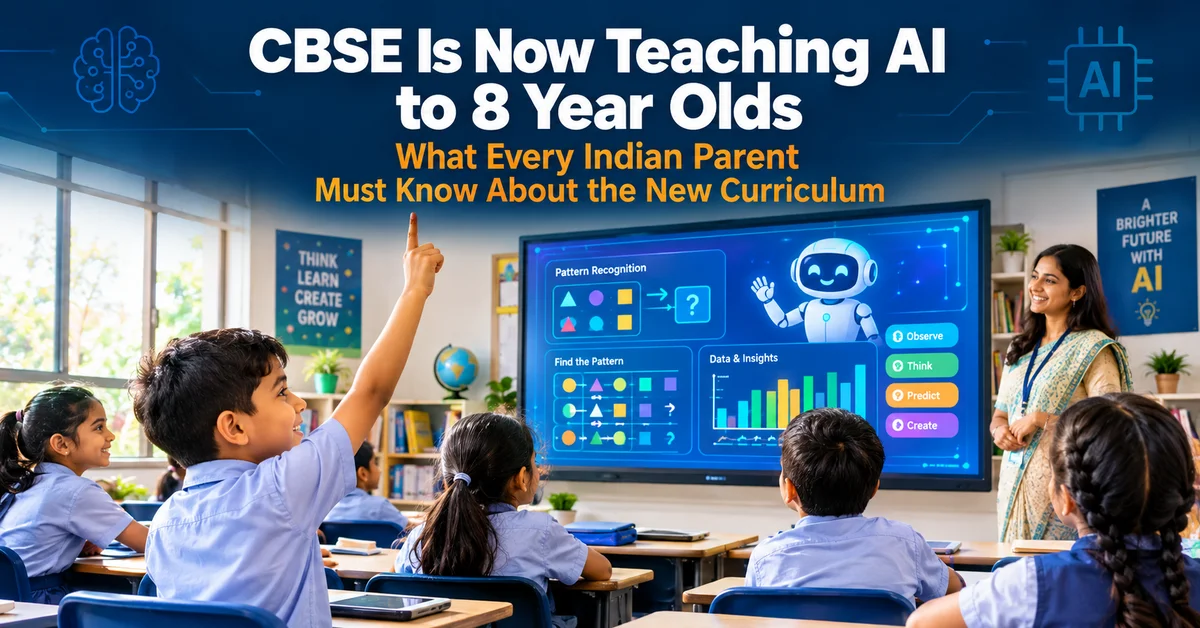
CBSE Is Teaching AI to Children from Class 3 — And It Is Changing Everything
I remember when I was eight years old. In classrooms the newest gadget was a calculator if you were lucky. The thought that a primary school child could spend a class learning how AI thinks makes decisions and changes the world would have felt like science fiction.