
India’s First Physical AI School Is Coming — And It Changes Everything About How We Think About Education

Esha
Content Writer & Education Technology Researcher
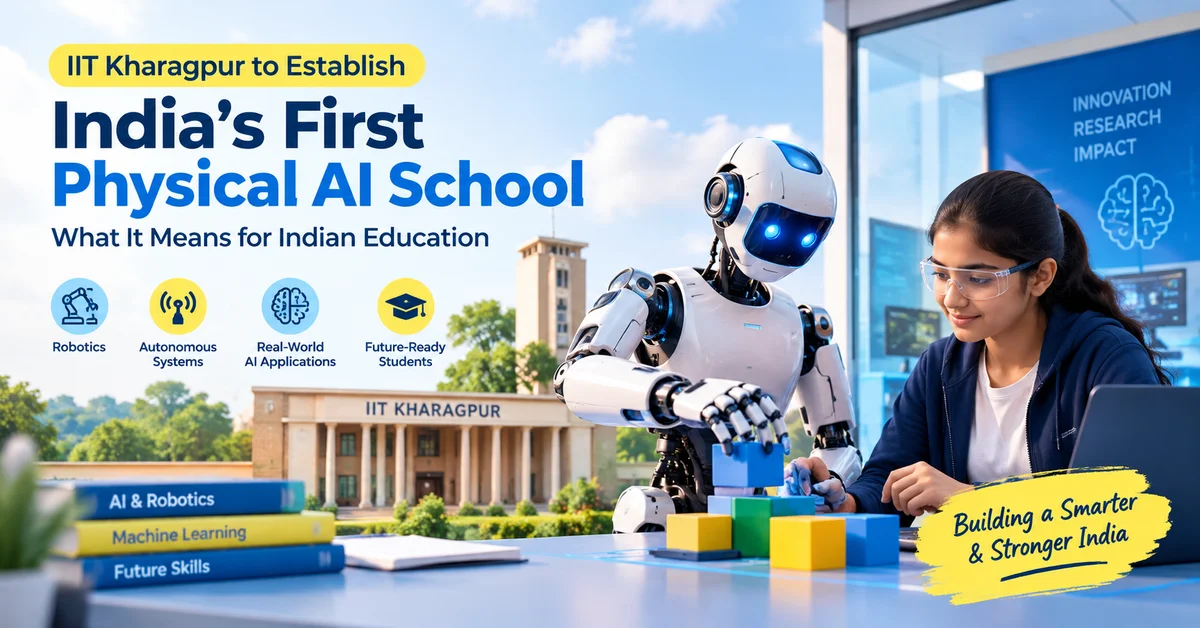
IIT Kharagpur to Establish India’s First Physical AI School: What It Means for Indian Education
Artificial intelligence is changing the way people learn, work and solve problems. From AI-powered learning platforms to intelligent automation, technology is transforming industries across India. However, the next major development in artificial intelligence goes beyond computer screens. It involves intelligent machines that can interact with and operate in the physical world.
This technology is known as Physical AI, and IIT Kharagpur has announced a significant initiative to advance this field in India.
On October 27, 2026, IIT Kharagpur announced plans to establish India’s first dedicated Physical AI School with an investment of ₹35 crore. Named the Jyoti Chatterjee School, the initiative will focus on robotics, autonomous systems and the development of AI technologies for real-world applications.
The announcement represents an important development in India's efforts to strengthen its research capabilities, technical education and technological self-reliance.
What Is Physical AI?
Physical AI refers to artificial intelligence systems that can perceive their surroundings, process information, make decisions and perform actions in the physical world.
Unlike AI systems that primarily generate text, analyze data or answer questions, Physical AI combines artificial intelligence with robotics, sensors, control systems and mechanical engineering.
Some potential applications include:
Robotics: Intelligent robots that perform industrial and practical tasks.
Healthcare: AI-enabled surgical assistance and diagnostic equipment.
Manufacturing: Automated production systems and intelligent machinery.
Agriculture: Smart agricultural equipment and autonomous farming systems.
Logistics: Intelligent systems that support warehouse operations and supply chains.
Infrastructure: Autonomous systems that assist with inspection, maintenance and monitoring.
These applications require professionals who understand both software intelligence and the physical systems through which AI interacts with the real world.
What Is IIT Kharagpur Building?
IIT Kharagpur's proposed Physical AI School is designed to bring together research, industry expertise and practical engineering.
According to the announcement, the institution will receive an investment of ₹35 crore and operate under the Dean of Research and Development.
Its planned activities include establishing industry-hosted laboratories, developing AI testbeds and creating co-development opportunities involving industry and government.
The initiative aims to encourage collaboration between researchers, engineers, businesses and public institutions. It also focuses on developing indigenous AI capabilities that can support India's technological and industrial ambitions.
The Jyoti Chatterjee School is intended to serve as a platform for interdisciplinary research and the development of Physical AI applications across sectors such as healthcare, manufacturing and public infrastructure.
Why Is Physical AI Important for India?
India has developed a substantial technology workforce in software development, data science and digital services. Physical AI creates opportunities to extend these capabilities into robotics, intelligent machinery and autonomous systems.
1. Supporting Industrial Automation
Manufacturing companies increasingly require systems that can improve productivity, monitor equipment and automate repetitive operations.
Physical AI research can help develop intelligent machines that respond to changing production conditions and support more efficient industrial processes.
2. Advancing Healthcare Technology
Healthcare applications may include robotic assistance, intelligent diagnostic equipment and automated systems that help medical professionals perform complex tasks.
These technologies could support healthcare delivery, although their effectiveness and safety depend on rigorous testing and appropriate clinical oversight.
3. Improving Agricultural Operations
AI-enabled machinery may help farmers with crop monitoring, precision agriculture and selected labour-intensive activities.
Research into autonomous agricultural systems could contribute to more efficient farming practices when adapted to local conditions.
4. Strengthening Technological Self-Reliance
Developing domestic research and engineering capabilities can help India design technologies suited to its own industrial, economic and infrastructure requirements.
The Physical AI School aligns with the broader ambition of building advanced technological capabilities as part of the Viksit Bharat 2047 vision.
How Will the Physical AI School Support Students?
Physical AI brings together several engineering disciplines, including computer science, mechanical engineering, electrical engineering and electronics.
Students and researchers working in this field need an understanding of algorithms, sensors, robotics, control systems and real-world testing.
The proposed industry-hosted laboratories and AI testbeds could provide opportunities to connect academic research with practical engineering challenges.
This type of collaboration is important because developing an intelligent system requires more than writing software. Engineers must also understand hardware limitations, environmental conditions, reliability and safety.
As Physical AI develops, professionals with interdisciplinary technical skills may find opportunities in robotics, industrial automation, intelligent manufacturing, healthcare technology and autonomous systems.
However, the availability of specific courses, admission requirements and career opportunities will depend on the programmes and partnerships established by the institution.
What Does Physical AI Mean for India's School Education System?
Although the new school is focused on advanced research, the broader development of Physical AI also raises important questions for school education.
Students can begin developing relevant foundations through mathematics, science, computational thinking, basic programming and practical problem-solving activities.
Robotics projects, sensor-based experiments and introductory AI activities can help learners understand how digital systems interact with the physical world.
Educational institutions can also use digital platforms to organize learning materials, assignments, assessments and student progress.
For example, schools looking to modernize their teaching and learning processes can explore this guide to the best LMS for schools in 2026. A Learning Management System can help institutions organise digital learning resources and manage academic activities in one place.
Technology-supported education is most effective when it complements strong teaching practices, practical activities and appropriate guidance from educators.
The Role of Digital Education Platforms in Preparing Students for the Future
As technology evolves, schools need efficient ways to organize academic information and monitor student progress.
Digital education platforms can support several important activities:
Organizing lessons, learning materials and assignments.
Managing student records and academic information.
Tracking learning activities and student progress.
Conducting assessments and maintaining examination records.
Helping teachers and administrators coordinate academic tasks.
Assessment is particularly important when institutions introduce new subjects and technical learning programmes. Schools need reliable ways to prepare examinations, organize assessments and review student performance.
To understand this area in more detail, read Brilliyo's guide to the best exam management software for schools in 2026.
An effective examination management system can help schools organize examination workflows and academic records, while teachers use assessment results to identify learning gaps and support students.
These digital tools do not replace hands-on robotics education or specialist laboratory facilities. Instead, they can help institutions manage the academic processes that support students throughout their learning journey.
Why Industry and Academic Collaboration Matters
Developing Physical AI systems requires collaboration across multiple fields.
Universities contribute scientific research, technical expertise and experimental facilities. Industry partners bring practical challenges, engineering experience and knowledge of deployment requirements. Government institutions can help establish priorities and support research aligned with national needs.
The proposed Physical AI School's emphasis on industry-hosted laboratories and co-development platforms is intended to encourage this type of collaboration.
Practical testing is especially important for autonomous systems because performance in a controlled laboratory may differ from performance in a real environment.
Researchers must evaluate reliability, safety, environmental conditions and the limitations of intelligent machines before these systems can be deployed responsibly.
Challenges Ahead for Physical AI in India
The establishment of a dedicated institution is an important step, but developing a strong Physical AI ecosystem will take time.
Several challenges will need attention:
Infrastructure and equipment: Robotics and autonomous systems require specialized laboratories, sensors, machinery and testing facilities.
Interdisciplinary skills: Students and researchers need opportunities to combine knowledge of software, electronics, mechanical engineering and AI.
Industry collaboration: Research outcomes must be tested against practical requirements and real-world constraints.
Safety and responsible development: Autonomous systems must be designed with appropriate safeguards, reliability testing and human oversight.
Early exposure to technology: Schools and colleges can help build foundational skills that prepare students for advanced technical education.
Addressing these challenges will require sustained investment, qualified faculty, research collaboration and opportunities for practical learning.
Conclusion
IIT Kharagpur's announcement of the Jyoti Chatterjee School marks an important development in India's Physical AI ambitions.
With a proposed investment of ₹35 crore and a focus on robotics, autonomous systems, industry-hosted laboratories and AI testbeds, the initiative aims to strengthen India's capabilities in intelligent physical technologies.
Its long-term impact will depend on how effectively the institution develops research programmers, builds partnerships and prepares students and researchers for emerging technical challenges.
The announcement also highlights a broader opportunity for India's education system: preparing learners not only to use digital technology but also to understand, develop and apply it.
As schools and colleges continue to modernize their academic processes, digital learning and examination management platforms can help organize education more effectively. Combined with strong teaching, practical science education and advanced research opportunities, these systems can contribute to a more technology-ready learning environment.
The future of AI will involve both intelligent software and machines that interact with the physical world. Building the skills and institutions required for that future will be an important part of India's technological development.
Frequently Asked Questions
1. What is India's first dedicated Physical AI School?
IIT Kharagpur announced plans on October 27, 2026, to establish a dedicated Physical AI School named the Jyoti Chatterjee School, with a proposed investment of ₹35 crore. Its focus includes robotics, autonomous systems and real-world AI applications.
2. What is Physical AI?
Physical AI combines artificial intelligence with robotics, sensors, control systems and physical mechanisms. It enables machines to perceive their surroundings, make decisions and perform actions in real-world environments.
3. Why is Physical AI important for India?
Physical AI has potential applications in manufacturing, healthcare, agriculture, logistics and infrastructure. Developing domestic expertise can support research, industrial automation and technological self-reliance.
4. What skills are useful for a career in Physical AI?
Relevant foundations include mathematics, programming, artificial intelligence, robotics, electronics, mechanical engineering, sensor technology and control systems. The skills required vary by role and specialization.
5. How can schools prepare students for future AI technologies?
Schools can introduce programming, robotics activities, mathematics, science experiments and computational thinking. Digital learning platforms can also help organize lessons, assignments and assessments.
6. How can an LMS help schools manage digital education?
An LMS can help schools organize learning materials, courses, assignments and student progress. Read Brilliyo's complete guide to the best LMS for schools in 2026 for more information.
7. Why is examination management software important for schools?
Examination management software can help institutions organize assessments, examination schedules, results and academic records. Schools can explore the best exam management software for schools in 2026 to understand the key features to consider.
About the Author

Content Writer & Education Technology Researcher
Esha is a Content Writer specializing in EdTech, School ERP, Learning Management Systems (LMS), AI in Education, and digital learning. She creates SEO-focused educational content that helps schools and institutions embrace modern technology.
Related Articles

India Shut 94,000 Government Schools in a Decade — And the Children Who Paid the Price
That is not a statistic that is easy to sit with. Every single day for the past ten years, somewhere in India, a government school closed its gates — permanently. The building may still stand. The classrooms may still exist. But the school, as a functioning institution that children could walk to in the morning and walk home from in the afternoon, is gone.
CBSE Is Teaching AI to Children from Class 3 — And It Is Changing Everything
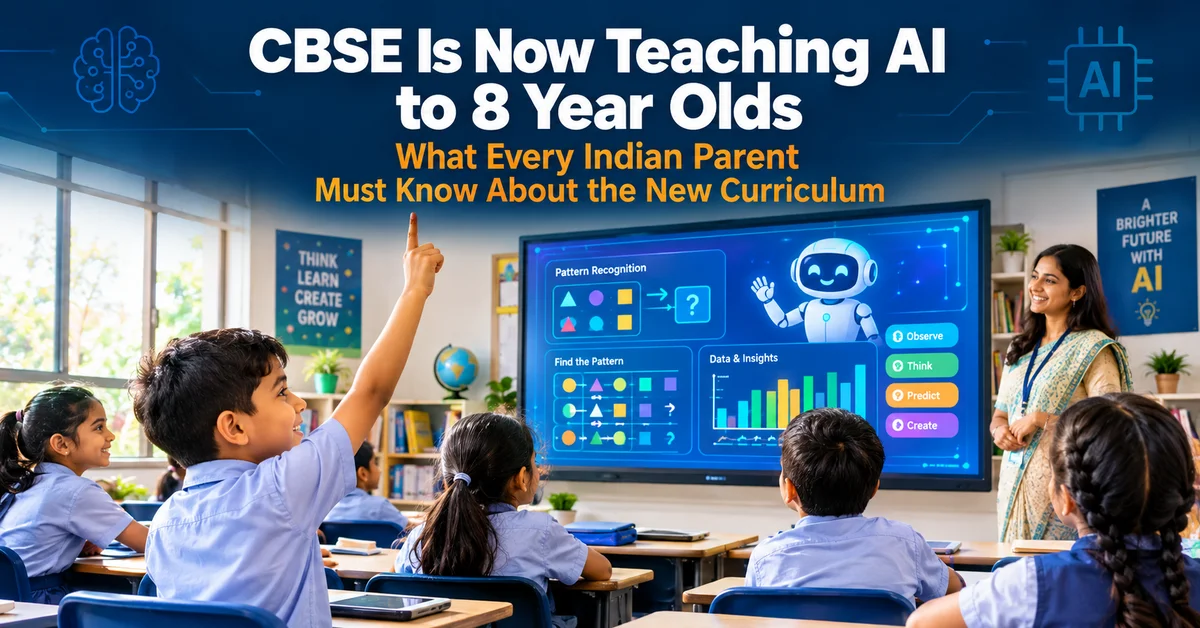
I remember when I was eight years old. In classrooms the newest gadget was a calculator if you were lucky. The thought that a primary school child could spend a class learning how AI thinks makes decisions and changes the world would have felt like science fiction.

Vidya Samiksha Kendra 2026 — How Data Is Finally Fixing India's Government Schools
For years the government school system in India has worked in a way that was hard to understand. Teachers were often not there. There was no good way to track that. Students started falling and by the time anyone noticed it was usually too late. Shown in exam results months later. Schools often didn't have textbooks and important information sat in a book that no one ever looked at.