
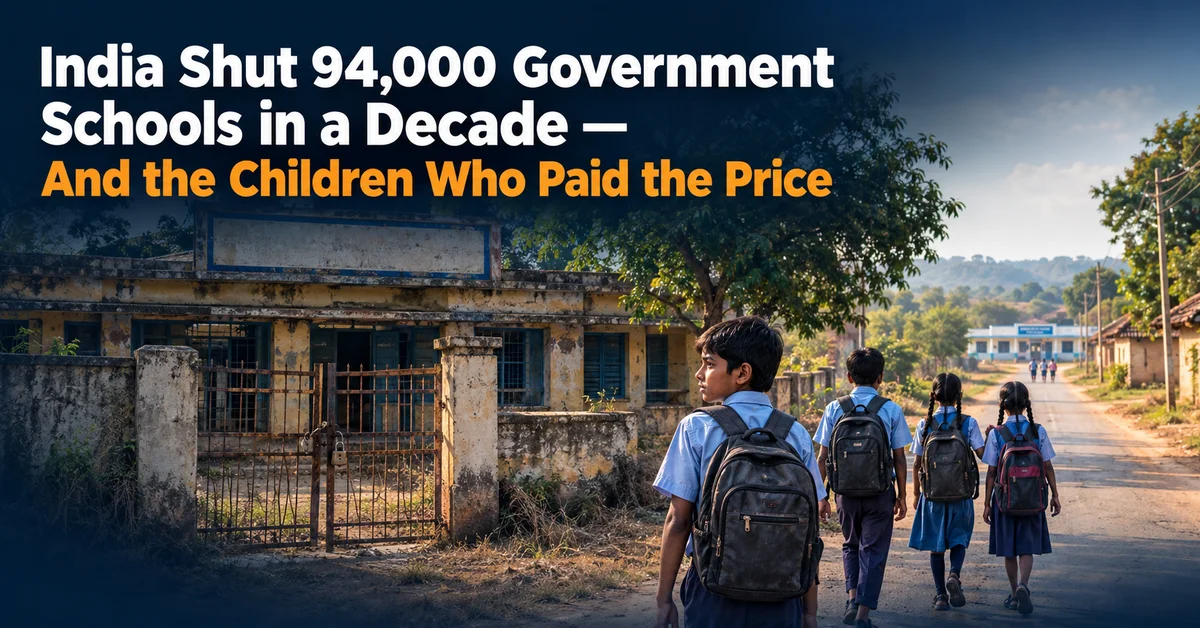
India Shut 94,000 Government Schools in a Decade — And the Children Who Paid the Price

Esha
Content Writer & Education Technology Researcher
That is not a statistic that is easy to sit with. Every single day for the past ten years, somewhere in India, a government school closed its gates — permanently. The building may still stand. The classrooms may still exist. But the school, as a functioning institution that children could walk to in the morning and walk home from in the afternoon, is gone.
A NITI Aayog report revealed that nearly 94,000 government schools have been closed over the past decade in India, averaging 25 school closures every single day. The report also found that the share of government schools in total enrolment has fallen from 71 percent in 2005 to 49.24 percent in 2024-25.
That last number deserves a moment of attention. For the first time in independent India's history government schools now serve fewer than half the country's enrolled students. The institution that was built to be the backbone of universal education — the school that every Indian child, regardless of their family's income, could access — is no longer the majority experience.
This is a significant shift. And the children it affects most are the ones who could afford it least.
What Is Actually Happening and Why
The government's explanation for the school closures is school rationalisation. States have been merging low enrolment schools to improve teacher and resource utilisation, supported by the NEP 2020 concept of school complexes and clusters.
The logic is defensible on paper. A school with twelve students and two teachers is an inefficient use of public resources. Merging it with a larger nearby school means the children get access to more teachers, better facilities and a more complete educational environment. The savings can be redirected toward improving the quality of the schools that remain.
In practice the picture is more complicated.
Across all 55 districts studied, more than 3,500 government schools recorded zero new admissions, while another 6,500 schools admitted fewer than 10 students during the academic session. These numbers point to a genuine enrolment crisis in parts of the government school system — a crisis that closure and consolidation alone cannot solve. When parents are choosing private schools over government schools in such significant numbers the problem is not the number of schools. It is the quality of what is happening inside them.
According to government data, three broad shifts have occurred over the past decade — fewer government schools, declining enrolment in government institutions alongside rising private school enrolment, and an increase in the number of teachers despite fewer schools and students. That last point is particularly telling. The system has more teachers per school than it did ten years ago. The students are leaving anyway.
Who Is Paying the Price
Government schools in India do not serve a random cross-section of the population. They serve a specific and identifiable group — the families who have no alternative.
Government school closures have significant implications because government schools primarily serve India's most disadvantaged communities. India is home to approximately 60 percent of the world's below-poverty-line population and the children from these households constitute the majority of government school students.
When a government school closes in a village or a small town the children who attended it do not simply transfer to a better school. Many of them face a journey that is now significantly longer — sometimes by several kilometres in areas where roads are poor and transport is unreliable. For families already navigating poverty that additional distance is not a minor inconvenience. It is a genuine barrier.
Girls are more likely to be withdrawn from school when access becomes difficult. This is one of the most painful consequences of the closure pattern. A girl who was walking to a school five minutes from her home may not be permitted by her family to travel thirty minutes or more to a merged facility. The school rationalisation that looked like efficiency on a spreadsheet translates, in the real world, into a girl who stops going to school.
The sharpest decline in government schools was seen in Uttar Pradesh, Madhya Pradesh and Jammu and Kashmir. These are also among the states with the highest concentrations of rural poverty and the largest populations of Scheduled Caste and Scheduled Tribe children — the communities that depend most heavily on government schools. Uttar Pradesh alone recorded a decline from 1.63 lakh to 1.38 lakh government schools during the same period, amounting to a reduction of over 25,000 schools.
🔗 When government schools do remain open the quality of communication between school and family becomes critical. Read more: How a Parent Communication App Builds Trust Between Schools and Families
The Right to Education Question
The Right of Children to Free and Compulsory Education Act of 2009 guarantees a neighbourhood school for every child aged 6 to 14 years. The RTE Act is a central act but implementation responsibility lies with the states.
This creates a contradiction that has not been adequately resolved. The law guarantees proximity. The rationalisation policy creates distance. The law exists to protect access for the most vulnerable children. The closures disproportionately affect the most vulnerable children.
States argue that merging schools into better-resourced clusters is consistent with the spirit of the RTE Act — that a better school slightly further away is preferable to a poor school close by. This argument has merit in certain contexts. But it assumes that children can reach the merged school reliably, that transportation is available and safe, and that families will not simply decide the distance is not worth it and pull their children out.
In rural India those assumptions frequently do not hold. And when they do not hold the legal guarantee of free and compulsory education becomes meaningless in practice even as it remains intact on paper.
The Shift That Nobody Planned For
The decline in government school enrolment is not purely a result of school closures. It also reflects a genuine shift in what Indian families want for their children — and what they are willing to sacrifice to get it.
Over the past two decades private school enrolment in India has grown significantly. Families that could not remotely afford private education a generation ago are now stretching their budgets — sometimes taking loans, sometimes sending both parents to work — to keep their children in private schools they believe will give them a better future.
This is not irrational. In many areas private schools genuinely offer better teaching, better infrastructure and better outcomes. The perception gap between government and private schools in India is real and has been documented extensively. Parents are responding to real experiences, not imagined ones.
But the consequences of this shift deserve honest attention. As government school enrolment declines the political and administrative pressure to invest in government schools declines with it. Schools that serve fewer children attract less attention, less funding and less accountability. The quality gap between government and private schools widens. More families leave. The cycle continues.
What starts as a rational individual decision — this parent choosing this private school for this child — accumulates into a systemic problem that affects the children whose families cannot make that choice. The children left in a declining government school system are the ones who have no alternative.
What This Moment Requires
The 94,000 school closures are a symptom of something larger. They reflect a government school system that has been losing the confidence of the families it was built to serve — not everywhere, not uniformly, but significantly enough to show up in enrolment data across a decade.
Reversing that trend requires something more fundamental than stopping closures or reopening merged schools. It requires genuine investment in the quality of what happens inside government school classrooms — teacher quality, teaching practice, learning outcomes, infrastructure and the kind of data-driven monitoring that can catch problems before they become permanent losses.
This is not an impossible task. There are government schools across India that are genuinely excellent — that attract enrolment, that parents choose over private alternatives, that produce outcomes that any school system would be proud of. They are not the majority experience but they exist in sufficient numbers to show that the problem is not inherent to the government school model. It is about what resources, attention and accountability are directed toward it.
The children sitting in government school classrooms today — the ones who stayed, whose families had no alternative — deserve the same quality of education that every child in India deserves. They are not a residual population to be managed with declining resources. They are the children the entire public education system was built for.
Twenty-five school closures a day over ten years is not just a statistic. It is a pattern with consequences that will be felt for a generation.
🔗 Tracking which students are actually attending school — and acting quickly when they are not — is one of the most important things a government school can do to protect enrolment. Read more: How Digital Attendance Tracking Is Improving School Management 2026
Frequently Asked Questions
Why did India shut 94,000 government schools in the last decade?
The main reason provided by state governments is school rationalisation — combining schools with low student numbers into larger, better-resourced institutions to improve efficiency. The closures also reflect a broader decline in government school enrolment as families who can afford to are increasingly choosing private schools. A NITI Aayog report highlighted the scale of these closures, averaging 25 schools per day over ten years.
Which states had the most government school closures?
The biggest declines were seen in Uttar Pradesh, Madhya Pradesh and Jammu and Kashmir. Uttar Pradesh alone saw a reduction of over 25,000 government schools during the decade — falling from 1.63 lakh to 1.38 lakh schools.
Who is most affected by government school closures in India?
The communities most affected are India's most disadvantaged — children from below-poverty-line families, Scheduled Caste and Scheduled Tribe communities and rural populations with limited access to private school alternatives. Girls are particularly affected because increased travel distance makes families more likely to withdraw them from school entirely.
Has government school enrolment declined in India?
Yes, significantly. The share of government schools in total enrolment fell from 71 percent in 2005 to 49.24 percent in 2024-25 — meaning for the first time government schools now serve fewer than half of India's enrolled students.
Does the closure of government schools violate the Right to Education Act?
The RTE Act of 2009 guarantees a neighbourhood school for every child aged 6 to 14 years. School closures and mergers that significantly increase the distance children must travel raise genuine questions about whether this guarantee is being upheld — particularly for children in rural and remote areas.
What should India do about government school closures?
Rather than simply stopping closures India needs to address the root cause — the quality gap between government and private schools that is driving families away. This requires sustained investment in teacher quality, learning outcomes, school infrastructure and data-driven monitoring systems that identify and address problems before they result in zero enrolment and eventual closure.
About the Author

Content Writer & Education Technology Researcher
Esha is a Content Writer specializing in EdTech, School ERP, Learning Management Systems (LMS), AI in Education, and digital learning. She creates SEO-focused educational content that helps schools and institutions embrace modern technology.
Related Articles
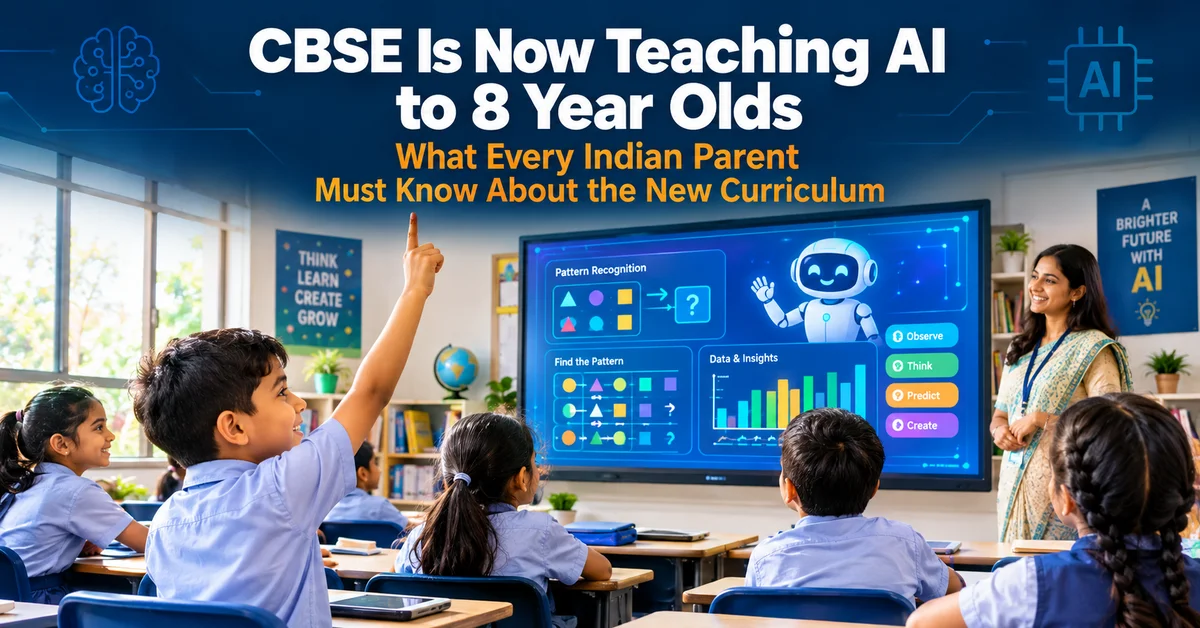
CBSE Is Teaching AI to Children from Class 3 — And It Is Changing Everything
I remember when I was eight years old. In classrooms the newest gadget was a calculator if you were lucky. The thought that a primary school child could spend a class learning how AI thinks makes decisions and changes the world would have felt like science fiction.
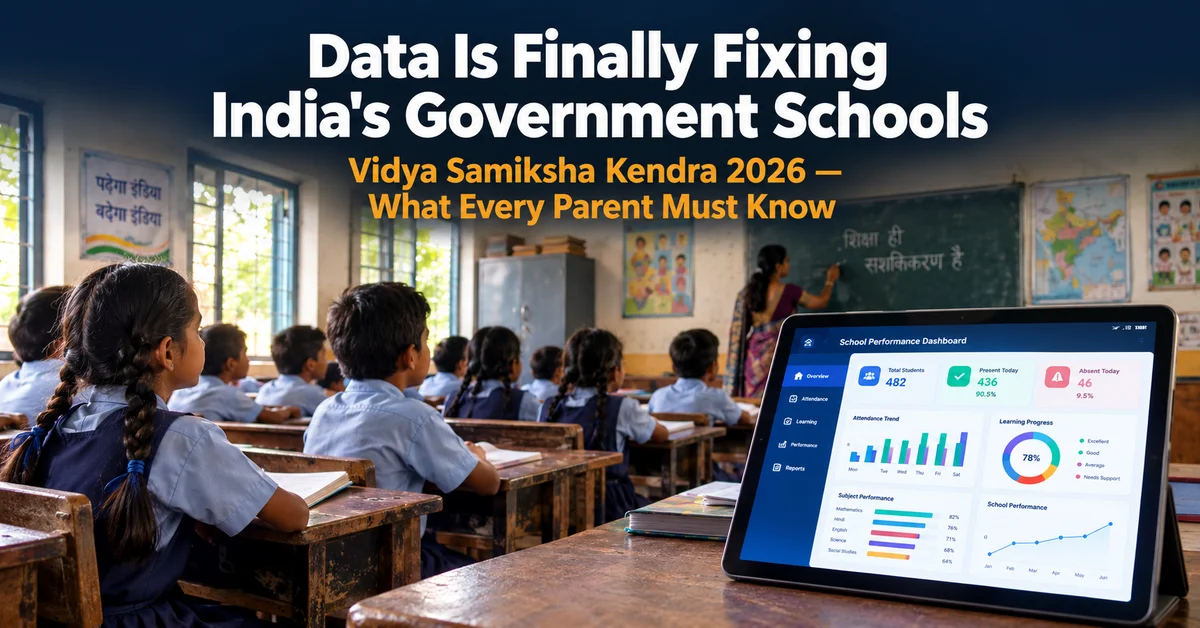
Vidya Samiksha Kendra 2026 — How Data Is Finally Fixing India's Government Schools
For years the government school system in India has worked in a way that was hard to understand. Teachers were often not there. There was no good way to track that. Students started falling and by the time anyone noticed it was usually too late. Shown in exam results months later. Schools often didn't have textbooks and important information sat in a book that no one ever looked at.
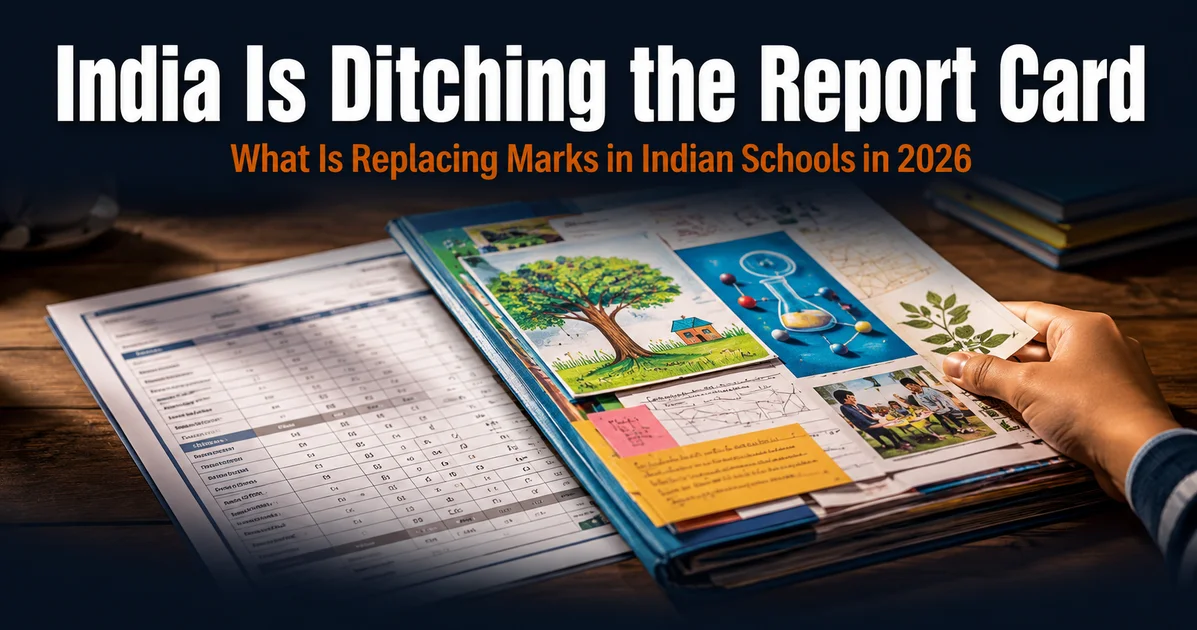
Why Indian Schools Are Finally Ditching Report Cards — And What Is Replacing Them
For generations the report card has been the important piece of paper in an Indian childs life. It comes twice a year. Parents wait for it with a mix of hope and worry. Children bring it home knowing that their worth in the eyes of school teachers and sometimes family has been cut down to a row of numbers. In 2026 that is beginning to change. The change is larger, more permanent and more meaningful than most parents and teachers in India realize.