
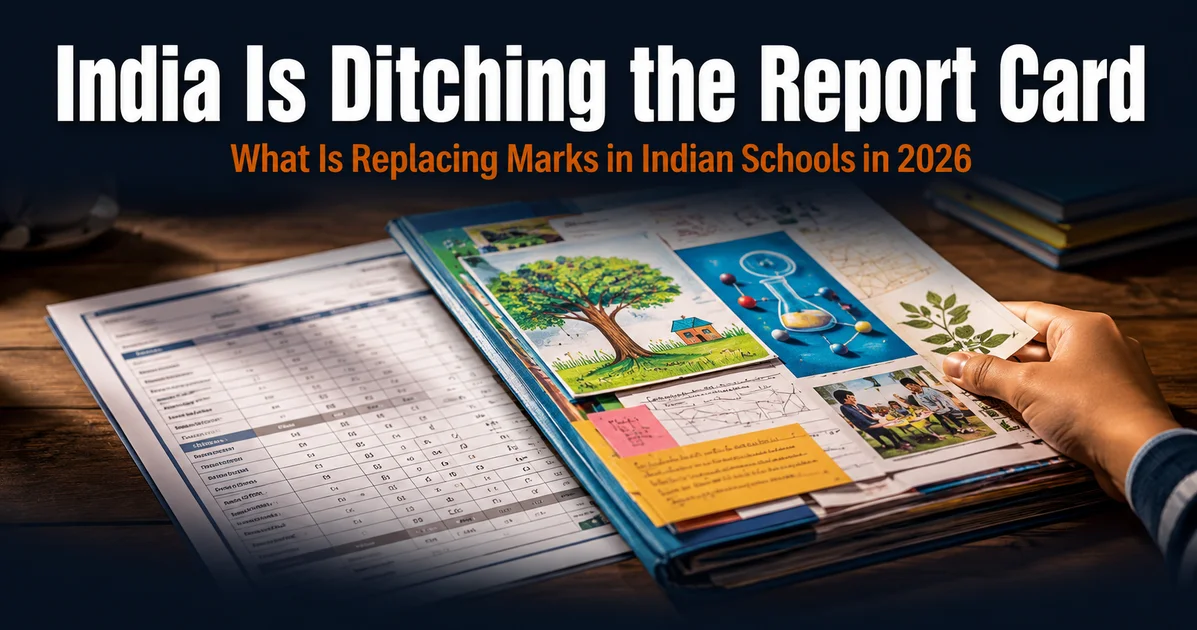
Why Indian Schools Are Finally Ditching Report Cards — And What Is Replacing Them

Esha
Content Writer & Education Technology Researcher
For generations the report card has been the most important piece of paper in an Indian child's life. It comes twice a year. Parents wait for it with a mix of hope and worry. Children bring it home knowing that their worth — in the eyes of school, teachers and sometimes family — has been cut down to a row of numbers.
In 2026 that is beginning to change. The change is larger, more permanent and more meaningful than most parents and teachers in India realize.
Schools across India — guided by NEP 2020, shaped by global education research and driven by a generation of teachers who have seen marks fail students for decades — are starting to move away from the traditional report card. In its place something more interesting and much more honest is emerging.
What Is Wrong With the Traditional Report Card
The traditional Indian report card has one fundamental problem. It tells you what a student scored. It tells you almost nothing about what a student actually knows, can do or is capable of becoming.
A student who scores 78 in mathematics might have a deep understanding of algebra but a mental block in geometry. Another student who scores the same 78 might have the opposite strengths. The number looks identical. The reality is completely different. A teacher who reads only that number gets no useful information about how to help either student.
The report card also captures a student at one moment in time — usually during an exam — and treats that snapshot as the full picture of their ability. A student who understood everything taught in six months but was unwell during the exam gets the same number as a student who never understood the material at all. The exam does not see the difference. The report card does not care.
Perhaps the most damaging part is that the traditional report card ranks children against each other instead of measuring them against their own potential. A child who started the year barely able to read and ended the year reading confidently is showing extraordinary growth. But if that child is still below the class average they will receive a poor report card. The growth is invisible. The number is all that counts.
🔗 When schools focus only on marks and scores they quietly kill something even more important in children. Read more: Why Indian Children Are Losing Their Curiosity by Age 10 — And What Schools Are Doing Wrong
What NEP 2020 Says About Assessment
The National Education Policy 2020 clearly stated that Indian schools must change how they assess students. NEP 2020 said we should move away from rote learning and from one final exam at the end of a term — and instead use continuous and thorough evaluation that follows a student's progress all year round.
NEP 2020 also demanded that assessments look at a wider set of skills. Not just memory of facts but also critical thinking, creativity, teamwork, communication and problem solving. These are the skills that decide if a student truly succeeds in life. A simple list of numbers on a report card cannot show these skills.
By 2026 schools that are fully putting NEP 2020 into practice find that this requires a complete rethink — not only of the exam but also of how they communicate a student's progress to parents.
What Is Replacing the Report Card
The most forward-thinking schools in India are trying out several new approaches — some of which are already well established in countries with high-performing education systems.
Portfolio-based assessment is one of the most promising methods. Instead of a single exam students gather a portfolio of their work during the year — projects, presentations, written work, experiments and creative pieces. It shows not just what the student made but also how the student's thinking grew over time. A parent who looks at a portfolio will see real growth — something that a single number on a report card can never show.
Narrative reports are taking the place of numbers in progressive schools. Instead of giving a single number teachers write a short specific paragraph explaining each student's progress, strengths, challenges and next steps. This takes more time. But it is far more useful. A parent who reads "Arjun has a strong grasp of fractions in theory but needs more practice using them in word problems — we suggest ten minutes of daily practice at home" knows exactly how to support their child. A parent who reads "74" knows nothing.
Competency-based progress reports look at specific skills rather than whole subjects. Instead of one score for English a student could be evaluated separately on reading comprehension, creative writing, grammar, vocabulary and speaking. This detailed picture helps teachers, parents and students see exactly where a child is strong and where they need support.
How Parents Are Responding
The response from Indian parents has been — predictably — mixed.
Parents who grew up in a marks-based system often feel lost when the new system arrives. When there is no number how do parents know if their child is doing well? How do they compare their child to classmates? How do they know if their child is on track for competitive exams?
These are genuine questions and they deserve honest answers.
The honest answer is that the new approaches do not aim to make comparison easier. They aim to make understanding deeper. A portfolio-based report does not tell parents whether their child is first or fifteenth in class. It tells parents whether their child is developing the skills, habits of mind and knowledge they will actually need — in exams, in college, in careers and in life.
For parents who are open to this shift the feedback has been overwhelmingly positive. Many report that for the first time they have a genuine understanding of their child's learning — where the specific gaps are, what strengths to nurture and how to support progress at home. The conversation between parent and teacher becomes richer, more specific and more useful.
🔗 Indian schools are also using digital tools to make learning more practical and hands-on. Read more: 845 Virtual Labs — How Digital Experiments Are Changing Indian School Education
What This Means for Competitive Exams
The most common concern raised by Indian parents when this conversation comes up is a practical one. Whatever assessment system a school uses internally — the child will still have to appear for board exams, entrance exams and competitive exams. Does moving away from marks-based assessment leave students unprepared?
The evidence from schools that have made this shift suggests the opposite. Students who learn through genuine understanding — assessed on whether they truly know something rather than whether they can reproduce it — perform better in high-stakes exams, not worse. Because they have actually understood the material rather than memorised it they can apply it flexibly under exam conditions.
The goal was never to eliminate exams. The goal was to ensure that the daily experience of learning in a classroom builds genuine understanding rather than just exam technique.
Conclusion
The report card is not disappearing from Indian schools overnight. For most students in most schools the familiar row of numbers will continue to arrive at the end of each term for years to come.
But the direction is clear. Schools that are changing now are not doing it because it is fashionable. They are doing it because years of research — from India and from high-performing education systems around the world — shows that grades alone are a poor measure of a child's true ability and an even poorer predictor of what that child might become.
The students who will succeed in 2047 — the India that NEP 2020 is building toward — are not the ones who memorised the most. They are the ones who understood the deepest, asked the most honest questions and kept learning long after the last exam ended.
A report card cannot capture that. But the right school can help build it.
🔗 India's brightest students are already being given opportunities to go beyond textbooks and exams. Read more: Vikram Sarabhai Space Quiz 2026 — Everything Indian Students Need to Know
Frequently Asked Questions
Why are Indian schools moving away from traditional report cards?
Traditional report cards capture only a single moment in time through exam scores and fail to reflect a student's genuine understanding, growth or wider skills. NEP 2020 has pushed schools toward continuous and comprehensive evaluation that gives a more complete and useful picture of student progress.
What is portfolio-based assessment in Indian schools?
Portfolio-based assessment involves students collecting samples of their work throughout the year — projects, writing, experiments and creative work — which together show their learning journey and growth over time rather than a single exam result.
Will moving away from marks-based assessment affect competitive exam performance?
Evidence from schools that have made this shift shows that students who learn through genuine understanding actually perform better in high-stakes exams — because they can apply knowledge flexibly rather than simply reproduce memorised content.
What does NEP 2020 say about student assessment?
NEP 2020 explicitly calls for moving away from rote learning and single-exam summative assessment toward continuous and comprehensive evaluation that measures critical thinking, creativity, communication and problem-solving alongside academic content.
About the Author

Content Writer & Education Technology Researcher
Esha is a Content Writer specializing in EdTech, School ERP, Learning Management Systems (LMS), AI in Education, and digital learning. She creates SEO-focused educational content that helps schools and institutions embrace modern technology.
Related Articles
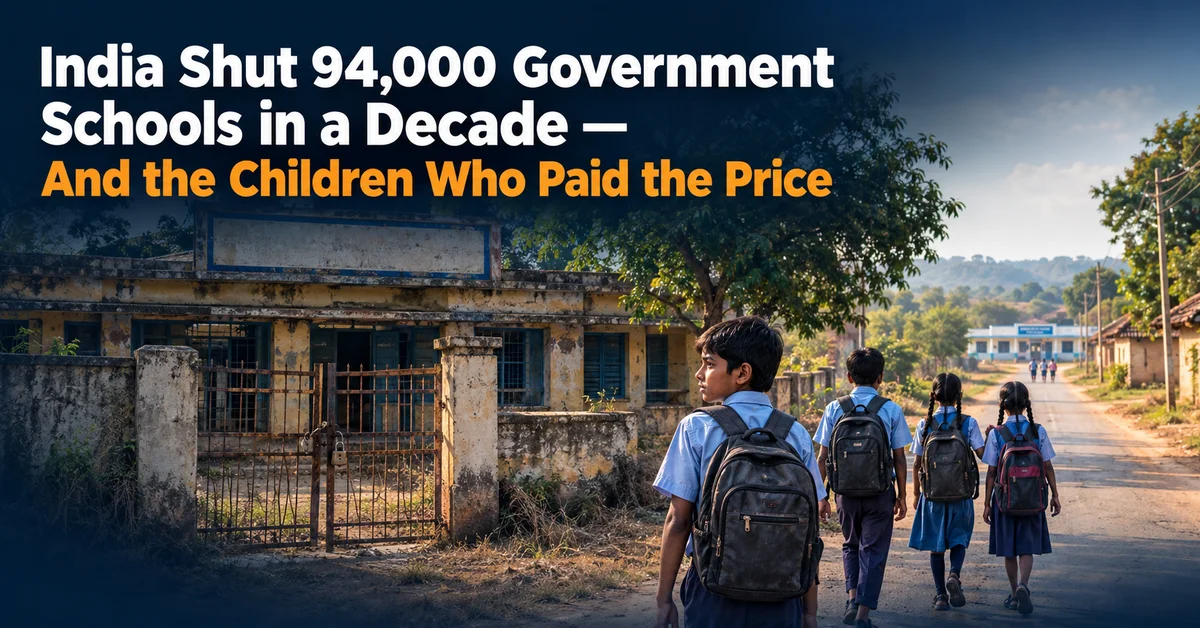
India Shut 94,000 Government Schools in a Decade — And the Children Who Paid the Price
That is not a statistic that is easy to sit with. Every single day for the past ten years, somewhere in India, a government school closed its gates — permanently. The building may still stand. The classrooms may still exist. But the school, as a functioning institution that children could walk to in the morning and walk home from in the afternoon, is gone.
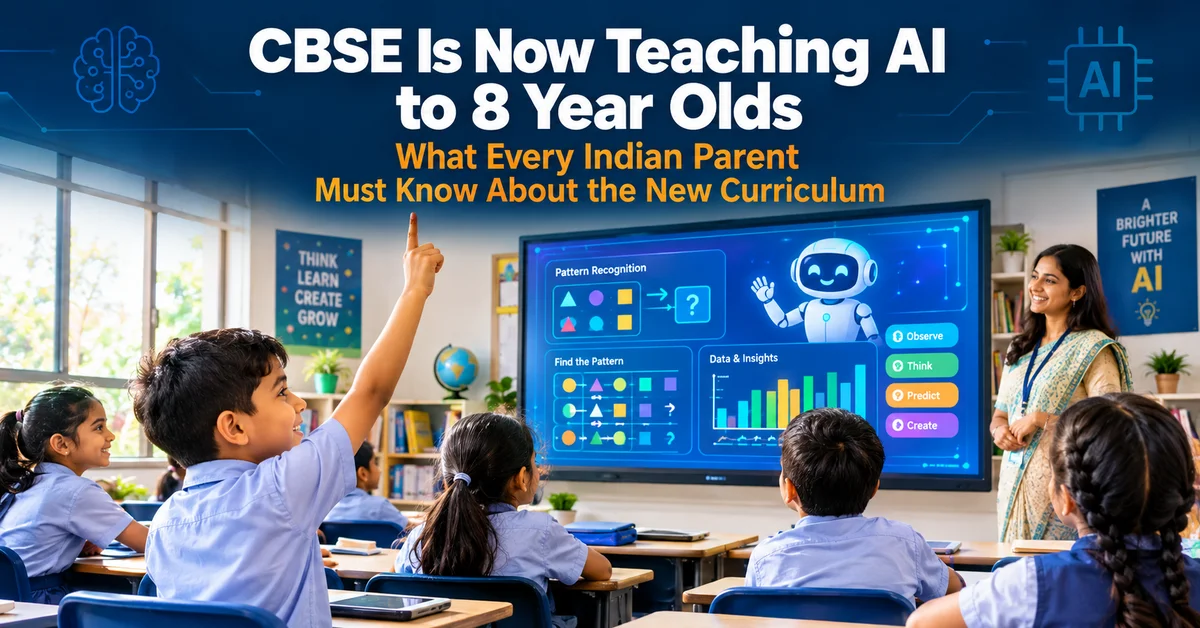
CBSE Is Teaching AI to Children from Class 3 — And It Is Changing Everything
I remember when I was eight years old. In classrooms the newest gadget was a calculator if you were lucky. The thought that a primary school child could spend a class learning how AI thinks makes decisions and changes the world would have felt like science fiction.
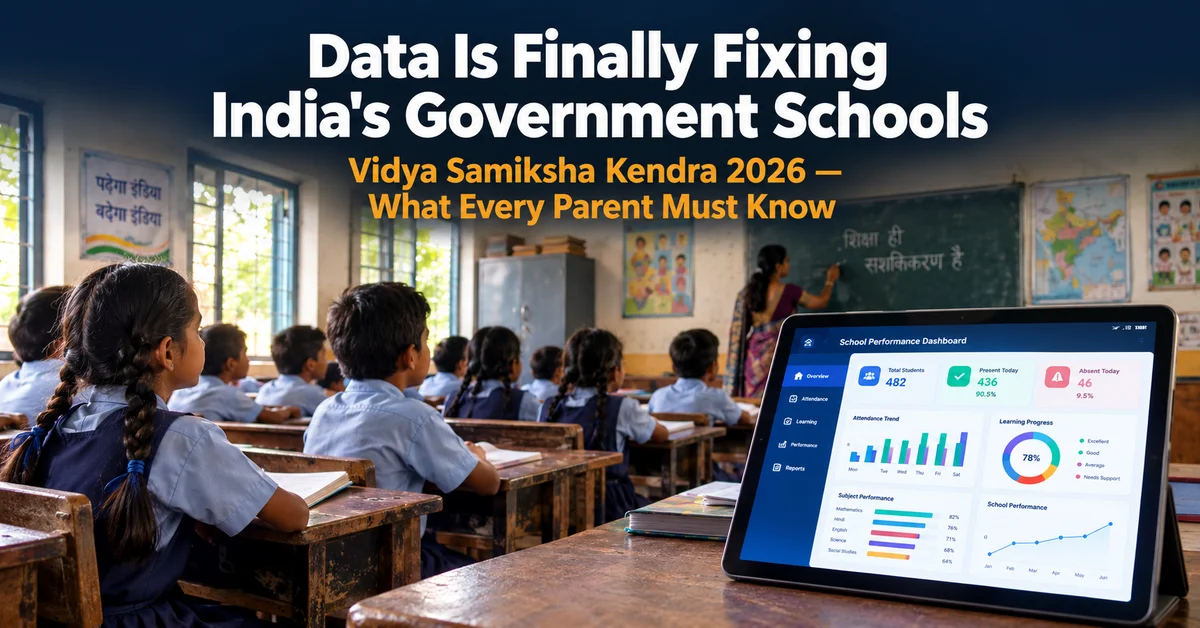
Vidya Samiksha Kendra 2026 — How Data Is Finally Fixing India's Government Schools
For years the government school system in India has worked in a way that was hard to understand. Teachers were often not there. There was no good way to track that. Students started falling and by the time anyone noticed it was usually too late. Shown in exam results months later. Schools often didn't have textbooks and important information sat in a book that no one ever looked at.