
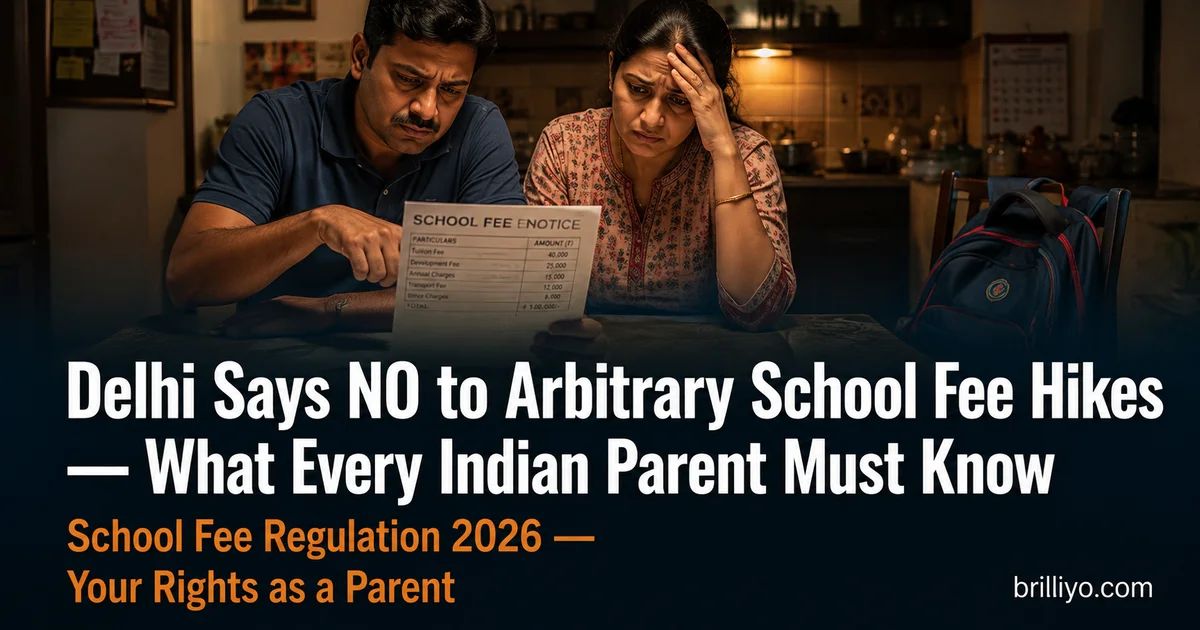
Delhi Private School Fee Regulation 2026 — What Every Parent in India Must Know Right Now

Esha
Content Writer & Education Technology Researcher
For years Indian parents have watched private school fees rise every year — by ten percent, sometimes by twenty — with no explanation, no discussion and no choice but to pay or pull their child out. A notice would arrive, the amount would increase, and the family would adjust.
In 2026 Delhi is trying to change that. And what is happening in Delhi right now could reshape how private school fees work across the entire country.
What Has the Delhi Government Done
The Delhi government has directed all private unaided schools to constitute School Level Fee Regulation Committees — called SLFRCs — for the current academic session under the Delhi School Education Transparency in Fixation and Regulation of Fees Act 2025, aimed at curbing arbitrary fee hikes.
In simple terms this means that private schools in Delhi can no longer decide their own fees alone. Every school must now form a committee that includes school management, teachers and parents — and fee decisions must go through this committee before being implemented.
Under the new law every private unaided school must form an SLFRC comprising:
Representatives of the school management
The principal
Three teachers
Five parents
One government nominee
Five parents on every school fee committee. That is not a small change. That is a structural shift in who has a voice in one of the biggest financial decisions affecting Indian families every year.
🔗 The pressure of private school fees is already pushing millions of Indian families to their financial limits. Read more: Why Indian Parents Are Taking Loans to Pay School Fees — And Regretting It
How the Process Will Work
The process has been designed with transparency at its core.
Schools must issue a seven-day public notice before conducting the draw of lots to select parent and teacher representatives. The entire process must be monitored by a government-appointed observer and video-recorded to ensure fairness.
Following directions of the Delhi High Court the DoE has instructed schools to continue charging the same fees as the previous year until revised fee structures receive approval from the regulatory committees. Any excess amount collected during this period will be subject to the final outcome of court proceedings and will have to be refunded or adjusted.
This means schools cannot raise fees first and explain later. They must go through the committee process before any increase takes effect. And if they have already collected more than last year's fees they may have to give the difference back.
For parents who have been paying higher fees this year without clarity — this is very important news.
What the Courts Have Said
The path to this regulation has not been straightforward. Private schools pushed back hard.
The Supreme Court raised concerns over the implementation of the Delhi School Education Transparency in Fixation and Regulation of Fees Act 2025, questioning whether the Act could be enforced during the ongoing academic session. The Action Committee of Unaided Recognised Private Schools — comprising over 900 Delhi private schools — filed a Special Leave Petition against the interim order passed by the Delhi High Court.
Over 900 private schools challenged this law in court. That number tells you everything about how much resistance this regulation has faced — and why parents needed a law in the first place.
Despite the legal challenges the framework has moved forward. The Supreme Court backed the regulation in principle while raising questions about implementation timelines. The Delhi High Court extended deadlines to give schools time to comply. The direction is clear — fee regulation is happening. The question is how quickly and how effectively.
Why This Matters for Parents Across India
Delhi's fee regulation law is significant not just for Delhi parents but for the entire country. India has no national law regulating private school fees. Most states have attempted regulation at various points with varying degrees of success. Many private schools have found ways around existing rules.
What Delhi is attempting — a mandatory committee at every school with real parent representation, video-recorded processes, government oversight and court-backed enforcement — is more comprehensive than most previous attempts at fee regulation in India.
If it works in Delhi it becomes a model for other states to follow. If it fails it will be used as evidence by private schools across the country that fee regulation is unworkable.
The outcome of this experiment will affect millions of Indian families well beyond Delhi.
What Parents Should Do Right Now
If your child is in a private school in Delhi there are specific things you should know and do immediately.
Find out if your school has formed its SLFRC. Schools were required to do this within the specified deadline. If your school has not formed the committee it is not in compliance with the law. You can raise this with the Directorate of Education.
Check whether your school has raised fees for 2026-27 above last year's fees. If they have done so without committee approval they may be in violation of the court order. Any excess amount collected may need to be refunded or adjusted.
If parent representatives are being selected at your school — participate. The draw of lots must be preceded by a seven-day public notice. Engaged, informed parents will make these committees work far better than passive ones.
Document everything. Keep copies of fee notices, receipts and any communication from the school about fees. If disputes arise this documentation will matter.
🔗 When the education system fails to protect families the impact on children can be deeper than most parents realize. Read more: The Day My Child Cried Before School Every Morning — What I Did Wrong as a Parent
What Schools Are Saying
Private schools have largely opposed this regulation. Their arguments are worth understanding even if you disagree with them.
Schools argue that fee regulation without corresponding freedom to manage expenses is unworkable. They cannot control costs — salaries, infrastructure, utilities, teaching materials — while having their revenue fixed by a committee. Some school associations have also argued that the law interferes with the autonomy of private educational institutions in ways that may not be legally sustainable.
These are not entirely unreasonable concerns. A fee regulation system that is poorly designed could harm good schools along with exploitative ones. The quality of implementation will determine whether this law achieves its goals or creates new problems.
Conclusion
The Delhi private school fee regulation of 2026 is one of the most significant education policy developments in India this year — and most parents outside Delhi do not even know it is happening.
This is India's most serious attempt yet to give parents a real voice in one of the biggest financial pressures they face. It is backed by law, supported by courts in principle and being resisted fiercely by private schools.
Whether it succeeds or fails will depend on how seriously parents engage with the process, how honestly schools implement it and how firmly the government enforces it.
This is not just a Delhi story. It is a preview of what the rest of India needs — and what parents everywhere deserve.
Frequently Asked Questions
What is the School Level Fee Regulation Committee in Delhi 2026?
A School Level Fee Regulation Committee or SLFRC is a mandatory committee that every private unaided school in Delhi must now form under the Delhi School Education Transparency in Fixation and Regulation of Fees Act 2025. It includes school management, teachers and parents and must approve any fee changes before they are implemented.
Can Delhi private schools raise fees in 2026-27 without the committee's approval?
No. Schools must continue charging the same fees as the previous year until revised fee structures receive committee approval. Any excess collected may need to be refunded.
How are parent representatives selected for the fee committee?
Parent representatives are selected through a draw of lots. Schools must issue a seven-day public notice before the draw. The process must be monitored by a government-appointed observer and video-recorded.
What should a parent do if their school has not formed the fee committee?
If your school has not formed its SLFRC by the required deadline it is not in compliance with the law. You can report this to the Delhi Directorate of Education and follow up with documentation of the fee notices you have received.
Will this fee regulation law apply to schools outside Delhi?
Currently the law applies only to Delhi. However it is being closely watched by parents, governments and school associations across India as a potential model for national fee regulation.
About the Author

Content Writer & Education Technology Researcher
Esha is a Content Writer specializing in EdTech, School ERP, Learning Management Systems (LMS), AI in Education, and digital learning. She creates SEO-focused educational content that helps schools and institutions embrace modern technology.
Related Articles

India’s First Physical AI School Is Coming — And It Changes Everything About How We Think About Education
There is a version of artificial intelligence that most people are familiar with by now. It lives on screens. It answers questions, generates text, recommends content and makes decisions in the background of digital systems. It is impressive, it is useful and it is already reshaping how India’s schools and universities are thinking about education.
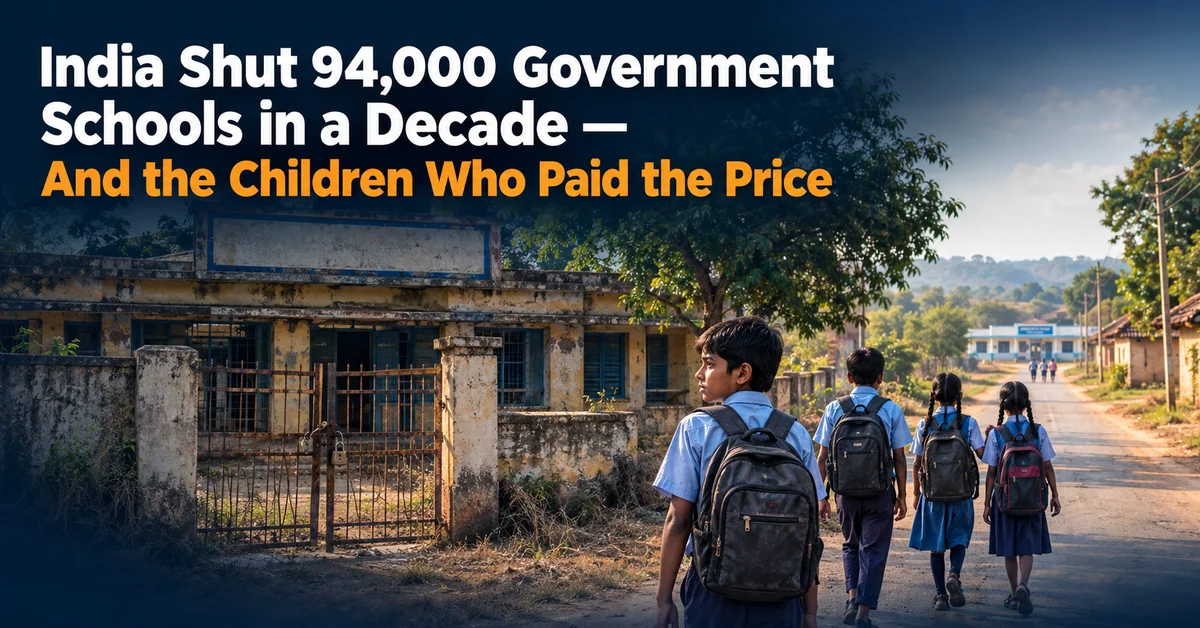
India Shut 94,000 Government Schools in a Decade — And the Children Who Paid the Price
That is not a statistic that is easy to sit with. Every single day for the past ten years, somewhere in India, a government school closed its gates — permanently. The building may still stand. The classrooms may still exist. But the school, as a functioning institution that children could walk to in the morning and walk home from in the afternoon, is gone.

CBSE Is Teaching AI to Children from Class 3 — And It Is Changing Everything
I remember when I was eight years old. In classrooms the newest gadget was a calculator if you were lucky. The thought that a primary school child could spend a class learning how AI thinks makes decisions and changes the world would have felt like science fiction.