
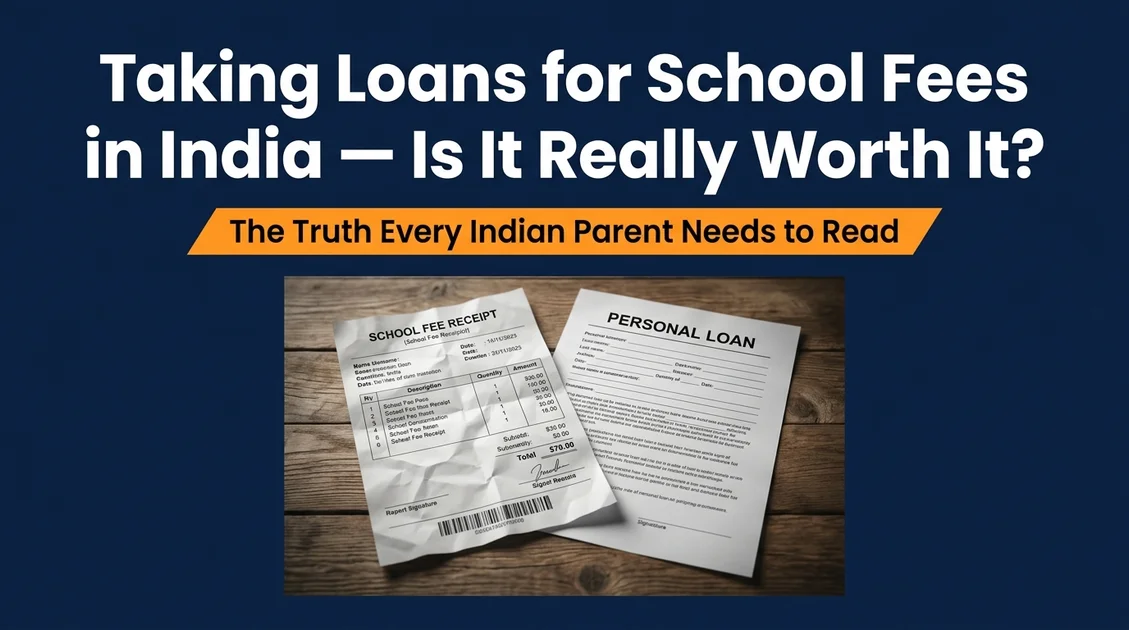
Why Indian Parents Are Taking Loans to Pay School Fees — And Regretting It

Brilliyo Editorial Team
Education Technology Experts
There is a conversation that people do not want to have out in the open in middle class Indian homes. A father is sitting at his kitchen table late at night. He is looking at his bank account. Doing the math again. School fees for his children are due next month. The amount he has to pay is more than what he earns in a month. He has already used up his savings. Now he is thinking about taking out a loan to pay for school fees.
He is not the only one facing this problem. In India in 2026, millions of parents are struggling to pay for their children's education. They are stretching their finances to the limit to keep their children in private schools. Many of these parents are quietly wondering if it is really worth it to spend so much money on school fees.
How School Fees in India Became Too Expensive
Twenty years ago private school education in India was expensive but families who were not very rich could still afford it. Today the situation is very different. The best private schools in cities like Mumbai, Delhi, Bengaluru and Hyderabad are charging anywhere from one lakh to ten lakh rupees per year. This does not even include the cost of uniforms, books, transport and other activities.
Every year many private schools increase their fees by ten to twenty percent. They do not usually explain why they are increasing the fees. They just send a notice to parents and parents have to decide whether to pay or take their children out of the school.
For a family that earns fifty thousand rupees per month, school fees can take up thirty to forty percent of their entire income. If you add the cost of rent, groceries, loan payments and basic household expenses it becomes very difficult for the family to make ends meet without borrowing money.
The Loan That Nobody Planned For
The decision to take a loan for school fees does not usually happen all of a sudden. It happens slowly over time.
It starts when you use the money you saved for things like a medical emergency, a home repair or a family wedding. When that money is gone parents ask family members for help. Then they take personal loans from banks and finance apps.
A large and growing number of parents in India are now taking personal loans specifically to pay for school and college fees. Bank managers across the country say that more and more people are taking loans for this reason.
The interest on these loans is usually between twelve and twenty four percent per year. So if a parent borrows two lakh rupees for school fees and takes two years to pay it back they will end up paying significantly more than they originally borrowed. The school gets its fees. The bank gets its interest. The family is left with less.
🔗 The pressure on Indian students is not just financial. It is also changing how they learn and think. Read more: Is ChatGPT Making Students Stop Thinking for Themselves?
Why Parents Keep Paying Despite the Pressure
If paying fees is so hard why do parents keep doing it? The answer says a lot about how Indian families think about education and social status.
Indian parents are afraid that if they do not give their child the best education their child will not have a good future. This fear makes them make financial decisions that do not always make sense. In India the school a child attends says a lot about the family — what kind of people they are, what they value and where they fit in society.
If a parent takes their child out of a well-known private school and puts them in a government school or a cheaper school it feels like giving up — even when it makes complete financial sense.
So parents borrow money. They make sacrifices. They tell themselves it will be worth it in the end.
The Regret That Comes Later
For many families the regret does not come right away. It comes years later when they add up how much they spent and look honestly at what they got in return.
A parent who spent eight to ten lakh rupees on schooling over twelve years, took multiple loans, did not buy a home, skipped family holidays and did not save for retirement — and then watched their child struggle to find a job after graduation — feels a very specific kind of devastation.
The pain is not just about money. It is the feeling of having given up everything for a promise that was not kept.
Some parents regret their decision not because their child failed but because they realize too late that their child would have done just as well in a more affordable school — with less pressure, better personal attention and a family that was not drowning in financial stress.
When a family is constantly struggling to repay loans it is not a calm environment for a child to learn. The very fees that were paid to give a child a better future can end up creating the anxiety that quietly undermines it.
What Parents Can Do Differently
The answer is not to stop caring about education. It is to think more carefully about what a good education actually means.
Government schools in India are not what they were twenty years ago. Because of NEP 2020 and various state-level reforms many government schools have improved significantly in terms of buildings, teaching quality and resources. Many children in these schools are performing just as well as children in expensive private schools — and their families are not struggling to pay for it.
Mid-range private schools that charge reasonable fees and genuinely focus on learning outcomes often produce better results than expensive brand-name institutions that sell status more than education.
Parents should visit schools, talk to other parents, look at actual learning outcomes and ask hard questions. They should not choose a school based only on its name, location or what their social circle thinks.
Hybrid and online learning platforms are also giving Indian students access to high quality education at a fraction of the cost. A child in an affordable school who has access to good learning tools at home can do just as well as a child in a very expensive private school.
🔗 More and more Indian students are realising that expensive degrees and institutions are not the only path to success. Read more: Why Indian Students Are Choosing Skills Over College Degrees
Conclusion
When parents decide to take a loan to pay for school fees it comes from love. From a fierce desire to give their child every possible chance to succeed. That love is real and it is a good thing.
But love without financial wisdom can cause real harm. A family that spends beyond its means on school fees is not just putting itself at financial risk — it is also putting its child at risk. Children feel their parents' financial stress more than parents realize — even when parents try to hide it.
The best thing Indian parents can give their child is not a famous school name on a certificate. It is a stable home, a calm environment, genuine encouragement and the belief that their child is capable — no matter which school they attend.
The school fee loan crisis in India is a symptom of a deeper problem — a belief that spending more money on school automatically means a better future for a child. In most cases it does not. And more and more Indian families are learning that truth the hard way.
Frequently Asked Questions
Why are school fees in India increasing so fast?
Private schools in India face very little regulation on how much they can charge in most states. Because of this many schools increase fees every year to fund buildings, pay administrative costs and generate profit — with little accountability to parents.
Is it a good idea to take a loan to pay private school fees in India?
Financial advisors strongly advise against taking high-interest personal loans for school fees. Paying back the loan over time usually ends up costing far more than the original amount — especially when quality education is available at more affordable schools.
What are the alternatives to expensive private schools in India?
There are good options available including improved government schools, mid-range private schools with strong learning outcomes, online learning platforms and hybrid education models — all of which can provide quality education at a much lower cost.
How much are private school fees in India in 2026?
Private school fees in India vary widely. They can be as low as twenty thousand rupees per year at affordable private schools and as high as ten lakh rupees or more per year at premium international schools in major Indian cities.
Can a child succeed in India without going to an expensive private school?
Absolutely yes. A child's success depends far more on their learning habits, family environment, curiosity and access to good teaching than on the name or fee structure of their school. Expensive private schools are not a requirement for success in India.
About the Author

Education Technology Experts
The Brilliyo editorial team shares insights on educational technology, learning management, and institution growth.
Related Articles
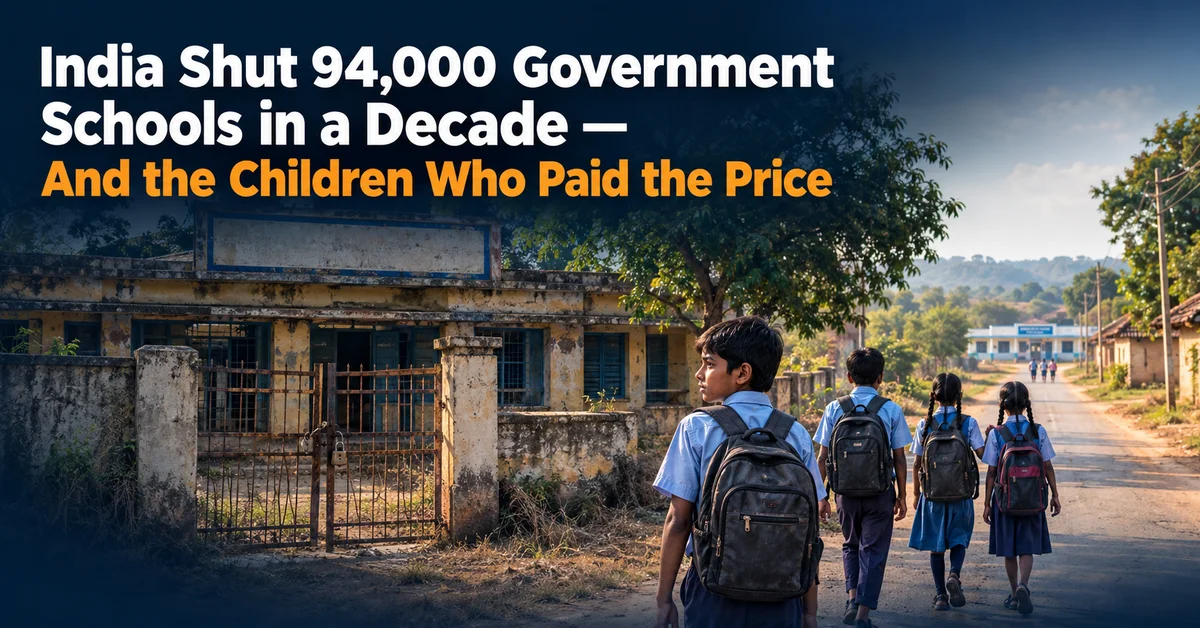
India Shut 94,000 Government Schools in a Decade — And the Children Who Paid the Price
That is not a statistic that is easy to sit with. Every single day for the past ten years, somewhere in India, a government school closed its gates — permanently. The building may still stand. The classrooms may still exist. But the school, as a functioning institution that children could walk to in the morning and walk home from in the afternoon, is gone.

CBSE Is Teaching AI to Children from Class 3 — And It Is Changing Everything
I remember when I was eight years old. In classrooms the newest gadget was a calculator if you were lucky. The thought that a primary school child could spend a class learning how AI thinks makes decisions and changes the world would have felt like science fiction.
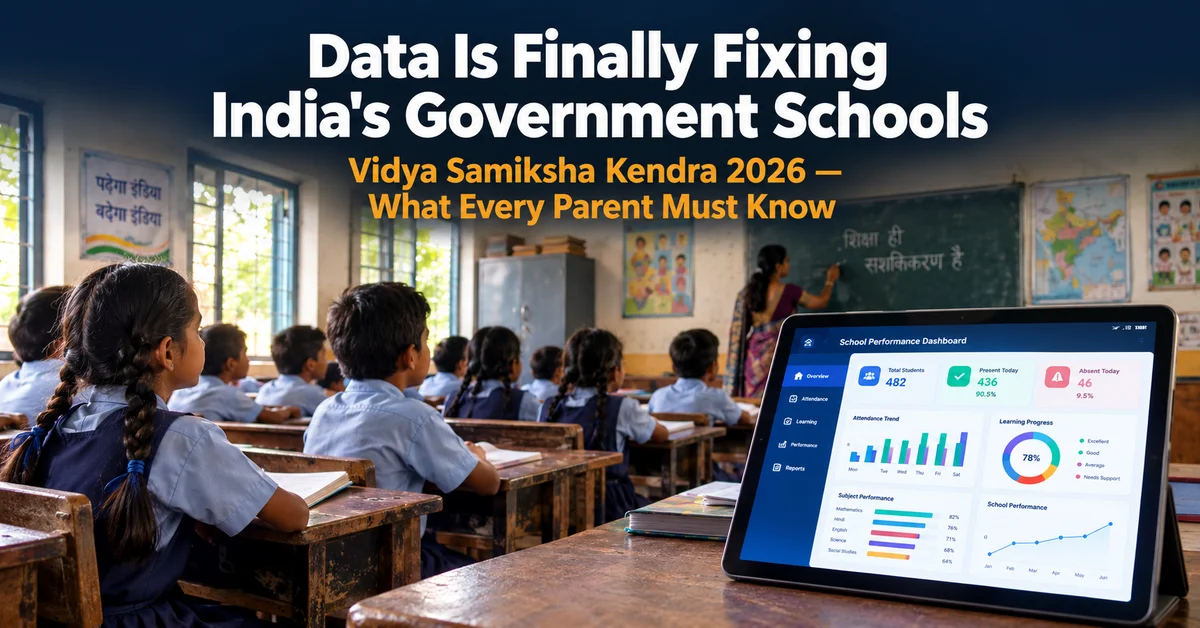
Vidya Samiksha Kendra 2026 — How Data Is Finally Fixing India's Government Schools
For years the government school system in India has worked in a way that was hard to understand. Teachers were often not there. There was no good way to track that. Students started falling and by the time anyone noticed it was usually too late. Shown in exam results months later. Schools often didn't have textbooks and important information sat in a book that no one ever looked at.