
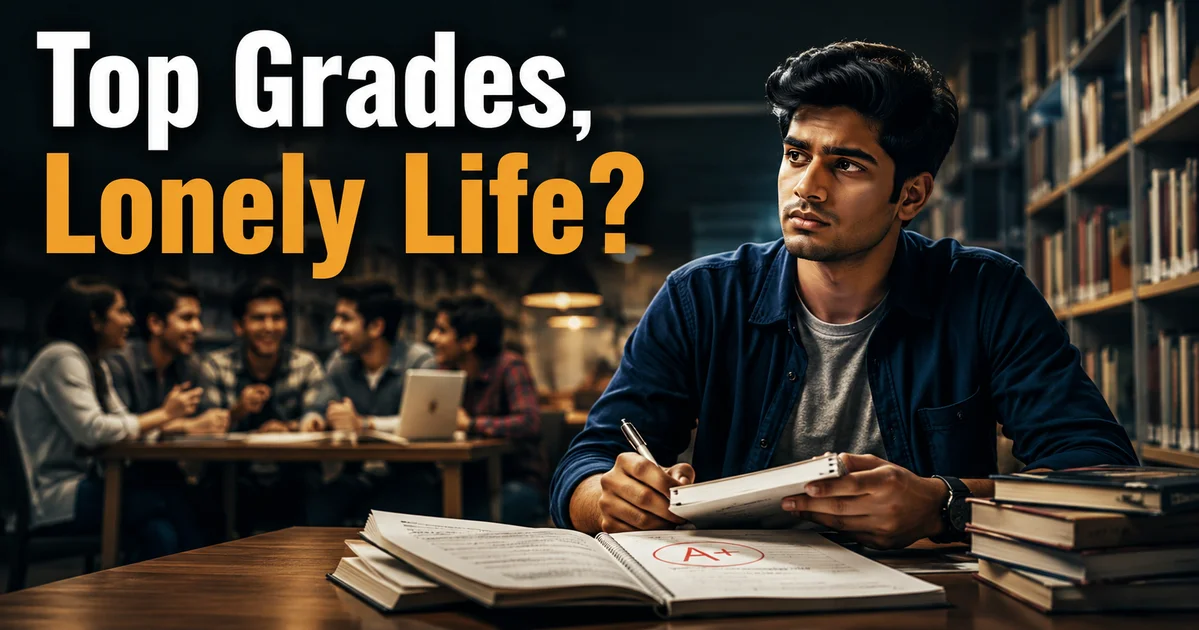
The Student Who Tops Every Exam But Cannot Make a Single Friend — India's Hidden Crisis

Esha
Content Writer & Education Technology Researcher
Every teacher knows this student. Every school has at least one.
They sit in the front row of the class. They always submit their assignments before the deadline. Their answer sheets come back with perfect scores every time. When it is time for prize distribution the perfect student walks to the stage again and again while the rest of the class claps politely. Their parents are very proud of them. Their name appears on the school notice board every term.
But watch them during lunch break. The perfect student sits alone. When it is time for group projects nobody wants to be in their team — not because they are not smart but because nobody actually knows them. At parties they stand at the edge of the room holding a paper cup watching everyone else laugh and hug and exchange numbers.
They topped every exam. They cannot make a single friend. And nobody in the Indian education system is talking about this.
How Indian Schools Created This Problem
The Indian education system has one main way to measure success — marks. Everything is designed around this single number. The student who scores the highest marks is celebrated. The student who scores the lowest is quietly pushed aside.
There is no prize for the student who made the new kid feel welcome. There is no grade for the child who helped resolve a conflict between classmates. There is no ranking for being kind, warm or making someone feel seen.
When you build an entire system around one metric, children learn to focus on that metric — and only that metric.
The perfect student who tops every exam has often spent years doing exactly what the system rewarded. They studied when others played. They revised when others talked. They gave up the time they needed to learn how to get along with people — because that time did not help them get good marks.
The system did not punish them for this. It rewarded them. And now at sixteen or eighteen or twenty-two they are brilliant, hardworking and deeply capable — but also profoundly alone.
What Parents Get Wrong
Most parents of high-achieving students in India know their child is lonely. They see it every day. Their child comes home with no stories about friends, no laughs, no conversations that mattered.
But they tell themselves it is temporary. "Once the exams are over they will have time for friends."
What they do not always accept is that connecting with other people is not a reward you get after studying. It is a skill — and like every skill it must be practiced and developed while the brain is still learning.
A child without genuine friendships in school misses out on far more than just fun. They miss out on experiences that build emotional intelligence — managing conflict, reading social cues, trusting others and recovering when a relationship breaks. In 2026 these are the skills that determine whether a brilliant person can lead a team, build a business or simply feel that their life is meaningful.
🔗 The pressure Indian families put on academic success is also creating a financial crisis at home. Read more: Why Indian Parents Are Taking Loans to Pay School Fees — And Regretting It
The Moment the Crisis Becomes Visible
For most of these students the hidden crisis stays hidden through school. Their grades protect them. Teachers respect them. Parents are proud. The loneliness is private and manageable.
Then they go to college or enter the workplace — and everything changes.
In college nobody cares about their board exam scores. People care about whether you are interesting to talk to, whether you can work in a group and whether you have something to offer beyond correct answers.
In the workplace the same pattern plays out with even higher stakes. A brilliant employee who cannot collaborate, cannot read emotional dynamics and cannot build relationships with colleagues hits a ceiling — and hits it fast. Technical skill without people skill is a ceiling, not a career.
Many of India's most academically decorated students reach this ceiling in their mid-twenties and do not understand why they are struggling. Nobody told them. The system never warned them. Their grades were always perfect — so how could anything be wrong?
The Social Skills India's Schools Are Not Teaching
India's schools teach algebra, history and grammar. Almost none of them teach children how to start a conversation with someone they do not know. How to disagree without hurting someone. How to ask for help without feeling ashamed. How to notice when someone is upset and respond with care rather than logic.
These skills are not something people are born with. They are learned through practice — through play, through unstructured time with peers and through making mistakes in low-stakes social situations.
The student who tops every exam has often had very little of this practice. Every hour of their childhood was accounted for — tuition, revision, mock tests, coaching classes. The gaps between studying were filled with screens, not with the kind of genuine human interaction that builds social confidence.
🔗 Technology is also changing how students think and interact with the world around them. Read more: Is ChatGPT Making Students Stop Thinking for Themselves?
What Needs to Change
The answer is not to tell academically strong students to study less. It is to change what schools and parents measure and celebrate.
India's schools need to create genuine opportunities for social development — sports, theatre, debate and community service are not optional extras. They are essential parts of a child's education.
Parents need to stop filling every hour of their child's day with academic preparation. Unstructured time — time to call a friend, make plans and figure out how to handle a disagreement — is not wasted time. It is some of the most important developmental time a child can have.
And India's schools need to start measuring what actually matters for a full human life — not just marks on an answer sheet but the ability to connect, collaborate, empathize and belong.
Conclusion
The student who tops every exam and cannot make a single friend is not a success story with a minor footnote. They are a warning — a signal that something fundamental is missing in how India is educating its children.
Academic excellence matters. It genuinely does. But a person who can solve every problem on a question paper and cannot solve the problem of loneliness has not been fully educated. They have been partially trained.
India's children deserve both. They deserve schools and families that celebrate their marks — and also notice whether they are happy, whether they feel connected and whether they have someone to sit with at lunch.
Because the child who can top every exam and walk into a room full of strangers and feel comfortable — that child is not just academically successful. That child is ready for life.
Frequently Asked Questions
Why do top Indian students struggle with making friends?
India's schools focus heavily on marks above everything else. Students who dedicate themselves entirely to academics often miss out on the unstructured social time needed to develop interpersonal skills — not because they do not want friends but because the system never told them those skills mattered.
Who should teach social skills — schools or parents?
Both. Schools should create structured activities that build real collaboration and communication skills. Parents should make sure their children have genuine free time to play, make friends and navigate social situations on their own.
Can social skills be developed later in life if missed during school?
Yes but it is significantly harder. The years between eight and sixteen are a critical window for social and emotional development. Skills built during this period come naturally. Skills learned later require much more conscious effort.
How can parents tell if their child is socially struggling even if doing well in school?
Watch what happens outside study time. Does your child have friends they genuinely enjoy? Do they talk about people at school with warmth? Do they get invited to things? Loneliness in a high-achieving child is often invisible because their marks reassure everyone that everything is fine.
What can schools do to help academically strong but socially isolated students?
Schools can create activities that require real teamwork and communication — theatre, sports, debate and peer mentoring programs. They can also train teachers to notice social isolation and treat it as seriously as they would treat poor academic performance.
About the Author

Content Writer & Education Technology Researcher
Esha is a Content Writer specializing in EdTech, School ERP, Learning Management Systems (LMS), AI in Education, and digital learning. She creates SEO-focused educational content that helps schools and institutions embrace modern technology.
Related Articles
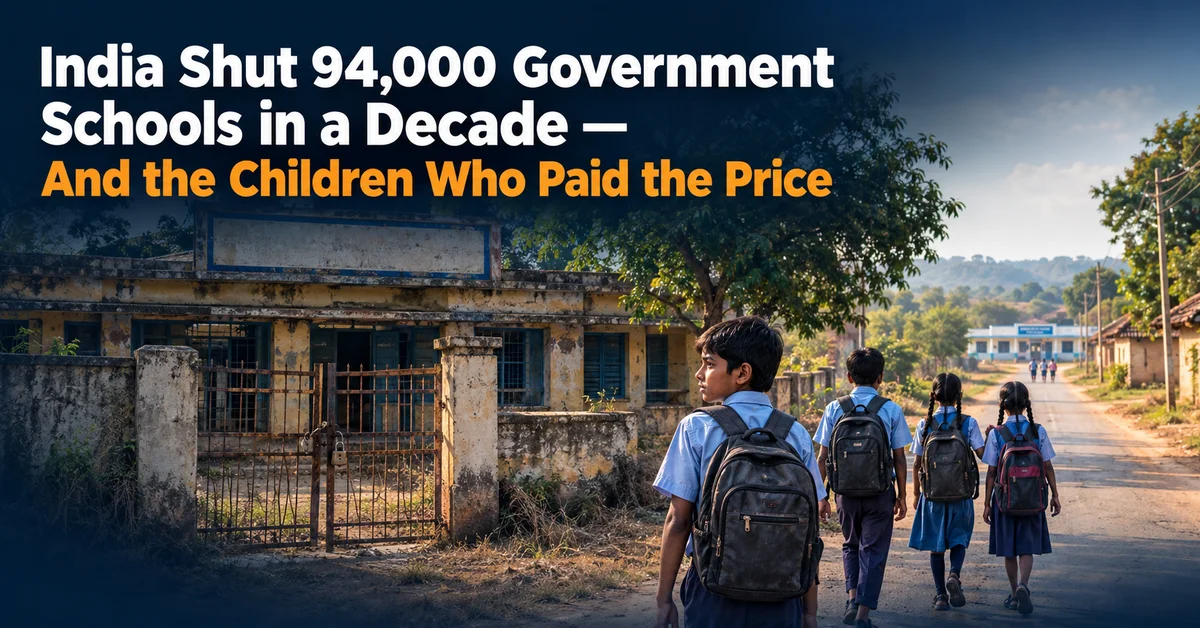
India Shut 94,000 Government Schools in a Decade — And the Children Who Paid the Price
That is not a statistic that is easy to sit with. Every single day for the past ten years, somewhere in India, a government school closed its gates — permanently. The building may still stand. The classrooms may still exist. But the school, as a functioning institution that children could walk to in the morning and walk home from in the afternoon, is gone.
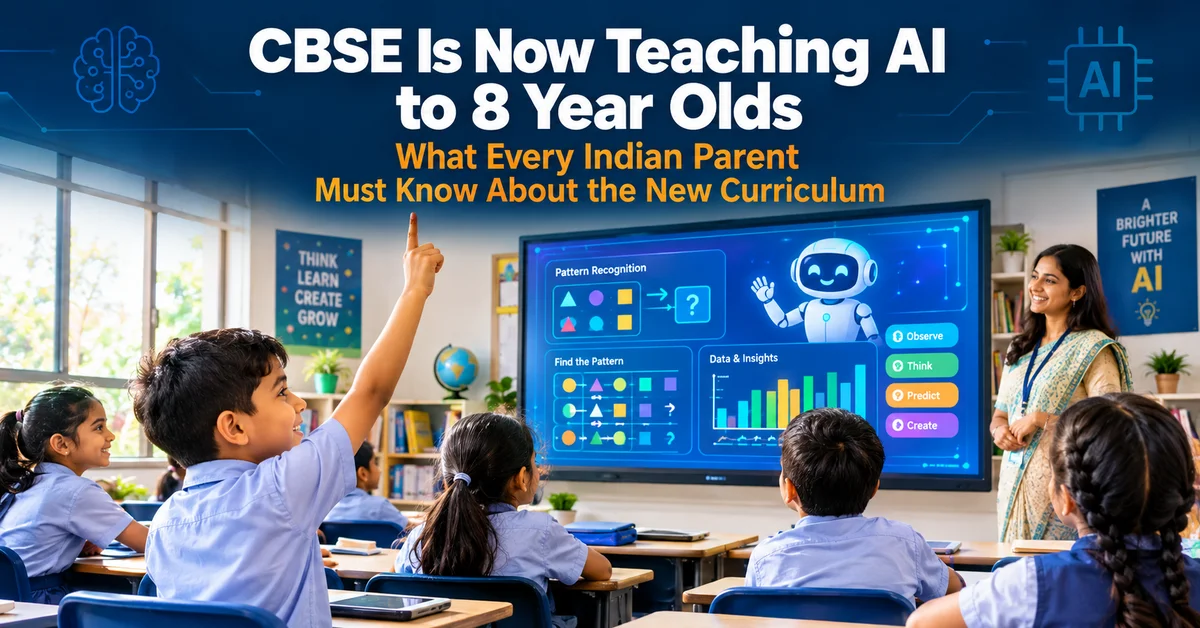
CBSE Is Teaching AI to Children from Class 3 — And It Is Changing Everything
I remember when I was eight years old. In classrooms the newest gadget was a calculator if you were lucky. The thought that a primary school child could spend a class learning how AI thinks makes decisions and changes the world would have felt like science fiction.
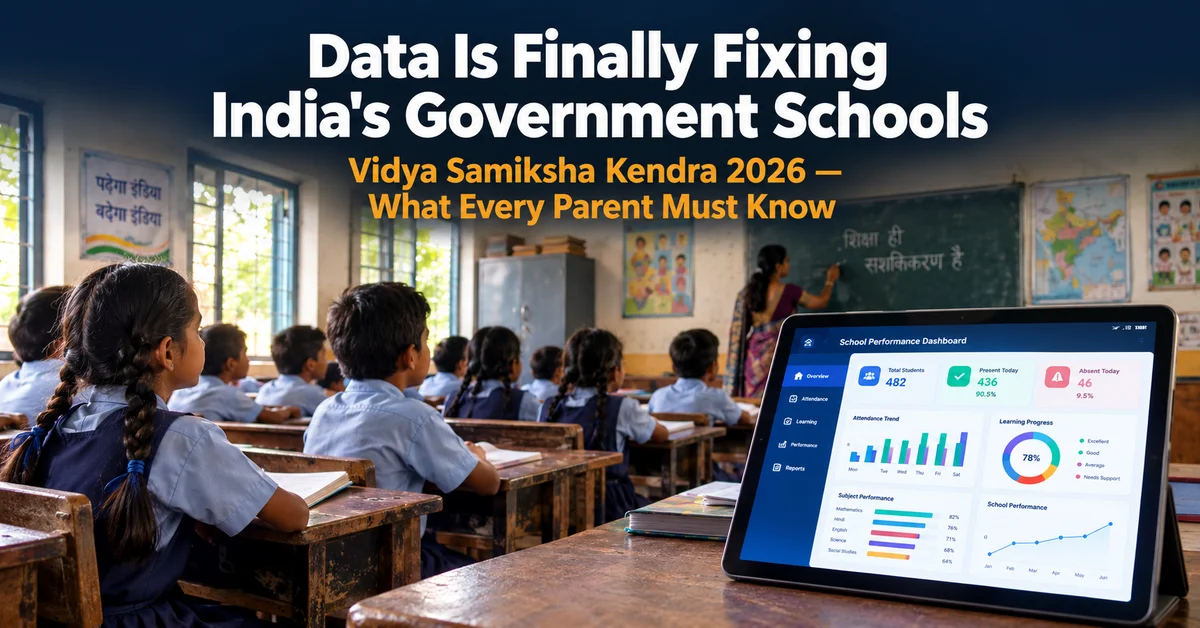
Vidya Samiksha Kendra 2026 — How Data Is Finally Fixing India's Government Schools
For years the government school system in India has worked in a way that was hard to understand. Teachers were often not there. There was no good way to track that. Students started falling and by the time anyone noticed it was usually too late. Shown in exam results months later. Schools often didn't have textbooks and important information sat in a book that no one ever looked at.